
P0174 System Too Lean (Bank 2): What One Bank Tells You
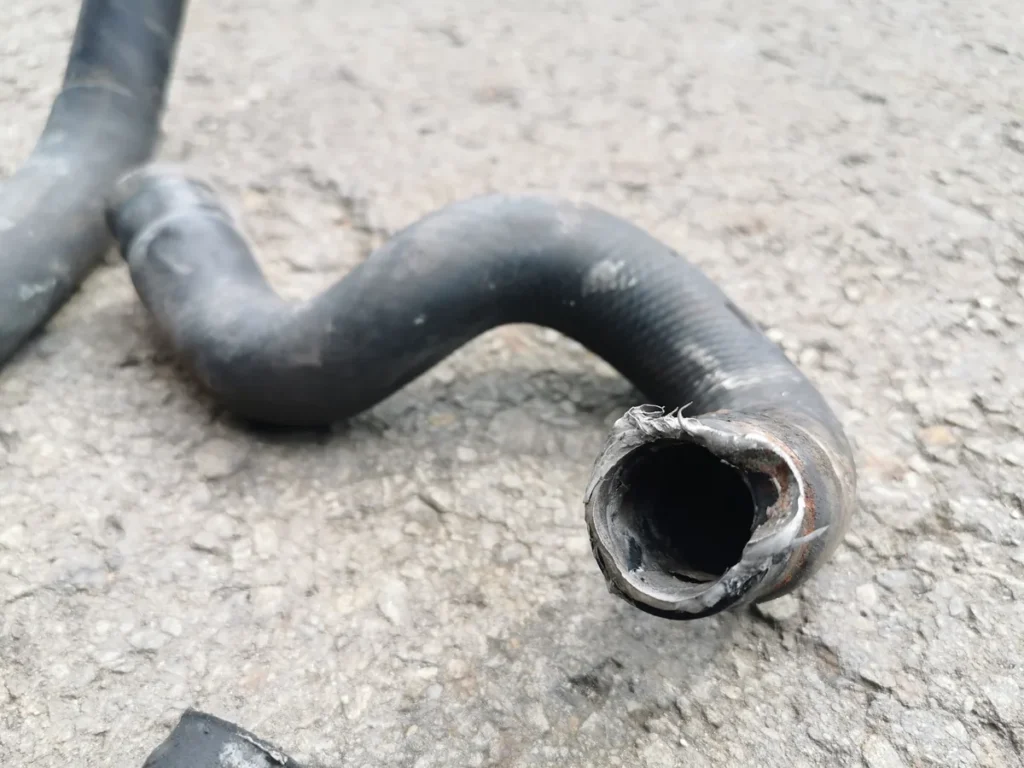
P0174 says the ECU has been holding the mixture up with extra fuel on bank 2 and has run short of adjustment doing it. On its own that is a more informative code than it looks, because your engine has two banks and only one of them is complaining. The question that shapes the whole diagnosis is whether bank 1 is complaining too.
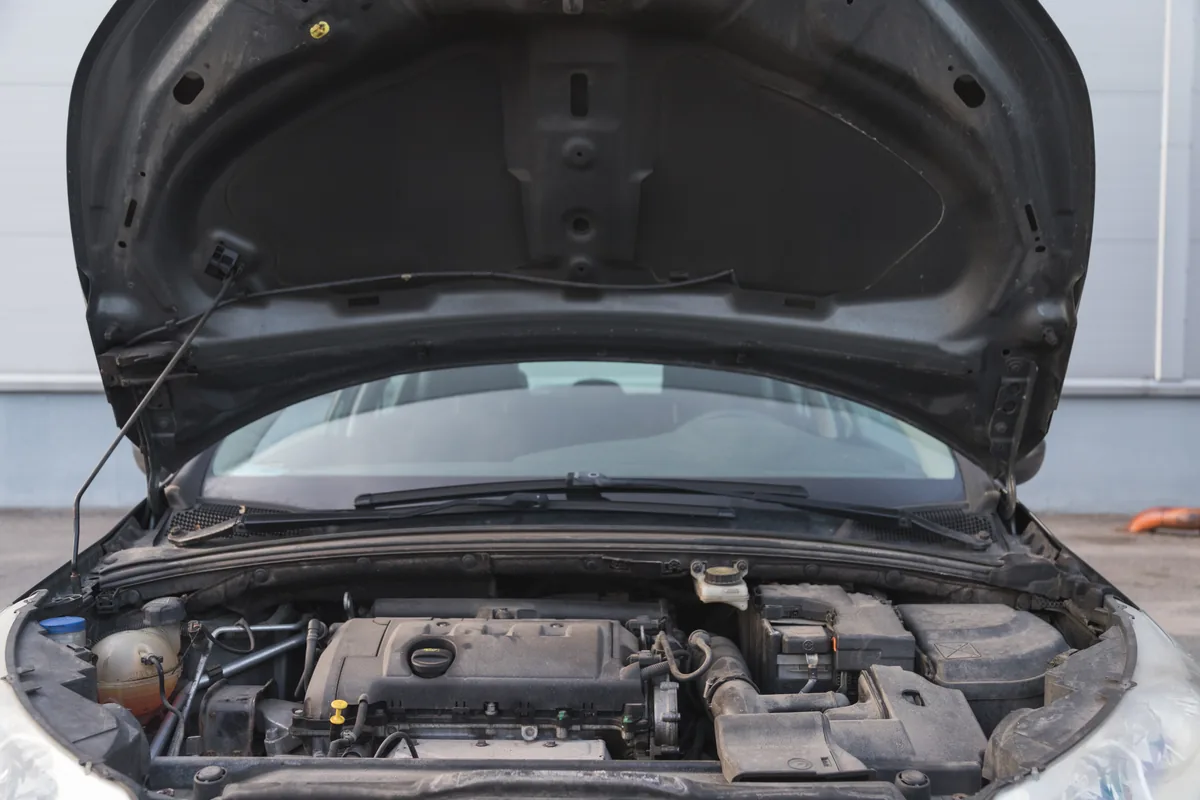
What the code actually means
A bank is one row of cylinders with its own exhaust manifold and its own upstream lambda sensor. Bank 1 contains cylinder number one; bank 2 is the other row. Only V-configuration and flat engines have two, which is why an inline four cannot set P0174 at all. If a scan tool reports it on a four-cylinder car, the tool is guessing at the manufacturer’s definitions.
Because each bank has its own sensor, the ECU keeps a separate pair of fuel trims for each. Short-term trim is the correction being applied right now; long-term trim is the offset it has learned. A positive number in either means the ECU is putting fuel in, which it only does when the exhaust it measured came back lean. Positive trims describe a lean measurement, not a rich engine, and that is the commonest misreading of these codes. Near plus 25 per cent the ECU is at the end of its authority and stores the code.
What makes this useful is the split. Half the engine is fed by shared components: one air filter, one airflow sensor, one fuel pump, one filter, one pressure regulator, usually one throttle body. The other half is bank-specific: that bank’s intake runners and manifold gasket, its injectors, its lambda sensor, its exhaust manifold. A fault in something shared should lean out both banks. A fault on one side can only lean out one.
So before anything else, read every stored code and put both banks’ trims side by side. P0174 with a healthy bank 1 sends you to one side of the engine. P0171 and P0174 together send you upstream of where the intake splits. Those are two different afternoons.
First thing to establish
Bank 2 alone: look at that bank’s intake gasket, injectors, vacuum lines and lambda sensor. Both banks: look at the airflow sensor, the shared intake tract, the breather system and fuel supply. Getting this distinction right removes most of the guesswork.
Symptoms you’ll actually notice
A single-bank lean fault is quieter than a whole-engine one, because half the cylinders are perfectly happy. Many owners notice nothing but the light. Where symptoms do show, expect some of these:
- A slightly rough idle, worse in gear with the air conditioning on
- Hesitation on light throttle that clears when you ask for more
- A hiss from one side of the engine bay at idle
- Fuel consumption creeping up for no obvious reason
- Misfire codes on the cylinders of one bank only
- A faint smell of unburnt fuel after a long idle
Do not treat a symptom-free lean code as harmless. Lean running raises combustion temperature, and months of it on one bank is hard on that bank’s exhaust valves and catalytic converter.
Likely causes, cheapest first
| Cause | Typical part cost | Why it’s on the list |
|---|---|---|
| Split vacuum line or breather hose serving one side | £5 to £30 | Bank-specific, and the cheapest possible answer. |
| Perished intake boot or loose clip after the airflow sensor | £8 to £45 | Shared, so expect P0171 alongside. Two minutes with a torch. |
| Dirty or oiled MAF hot wire | £6 to £10 for MAF cleaner | Shared. It under-reads airflow, so the ECU under-fuels both banks and trims both upwards. |
| Stuck open or leaking PCV valve | £12 to £60 | Usually shared, though some V engines give each bank its own breather path. |
| Exhaust leak ahead of the bank 2 lambda sensor | £8 to £80 for a gasket, clamp or studs | Bank-specific. Air drawn in at a leaking joint reaches the sensor and reads as lean. |
| Failing or lazy bank 2 upstream lambda sensor | £25 to £120 | Bank-specific. A sensor reporting lean when the mixture is fine makes the ECU add fuel it does not need. |
| Leaking intake manifold gasket on that bank | £15 to £90 for gaskets | Bank-specific and common on higher-mileage V engines with a plastic manifold. |
Every figure above varies enormously between models. The order is the important part: it is tempting to replace the bank 2 sensor first, because the code names bank 2, but the sensor is usually the messenger. Work through the cheap air leaks, and spend nothing until you have compared the two banks.
Narrowing it down with live data
This is the code where live data earns its keep more than almost any other, because the comparison between the banks is the diagnosis. Watch short-term and long-term trim for both banks together, plus mass air flow in grams per second, both upstream lambda voltages, calculated load and RPM. Let the engine reach full temperature first, since trims taken during warm-up mean nothing.
If bank 2’s long-term trim sits well into positive territory while bank 1 hovers near zero, the fault is on one side and you can stop looking at anything shared. If both banks are up by a similar amount, it lies upstream of the split: airflow measurement, the shared intake tract, the breather system or fuel supply.
Then take the reading again at a steady 2,500 rpm. An air leak is a fixed-size hole, so it matters most when total airflow is smallest. Trims that are high at idle and fall away as revs rise point at a leak. Trims that are acceptable at idle and worsen under load point at fuel delivery, which affects both banks and rarely produces P0174 alone.
One more test is worth knowing. If the trims are one-sided and you suspect the sensor, swap the two upstream lambda sensors between banks and clear the codes. If the high trim follows the sensor, the sensor is at fault; if it stays on bank 2, the engine is. A healthy upstream sensor on a warm petrol engine flicks rapidly between roughly 0.1 V and 0.9 V, while one sitting low and flat is suspect.
Do not skip freeze frame, which captures engine speed, load and coolant temperature at the moment the code set and shows whether the fault appears at idle, at cruise or under load. Live data and freeze frame need an edition that includes them, which you can check on the edition comparison.
Garage bill versus doing it yourself
| Job | Typical UK garage | DIY parts only |
|---|---|---|
| Diagnosis with a smoke test to find an air leak | £50 to £120 | An hour of your time and a torch |
| Replace vacuum or breather hoses on one bank | £50 to £130 | £5 to £30 |
| Replace one upstream lambda sensor | £110 to £280 | £25 to £120 |
| Replace intake manifold gaskets on a V engine | £250 to £700 | £15 to £90 |
| Replace one fuel injector | £140 to £400 | £40 to £140 |
Diagnostic work in the UK is commonly billed at about an hour of labour, at rates typically between £50 and £130 an hour and higher at a franchised dealer. V engines push the labour end of every one of these jobs upwards, because the rear bank is the awkward one. Costs differ wildly from car to car, so treat the ranges as orientation.
When this is a DIY job and when it isn’t
Within reach at home
Tracing and replacing cracked vacuum and breather hoses needs little more than a screwdriver and good light, and cleaning the airflow sensor is quick. On many V engines the front bank’s upstream sensor comes out from above with a slotted oxygen sensor socket, and a gently warmed exhaust usually releases the thread. Use anti-seize on the threads only, never near the sensing tip.
Worth paying someone for
The rear bank on a transverse V6 is another world. Sensors buried against the bulkhead often need a lift, and one that shears off in the manifold turns a modest job into a large one. Manifold gasket work has a torque sequence that matters, and getting it wrong creates the very leak you set out to cure. If the fault is on the back bank, book it in.
Clearing the code the right way
Clear the code only after the repair, then use its return or absence as the test. Note both banks’ long-term trims before you start and again after a week of driving. If the bank 2 figure has come back towards zero and stayed there, you fixed the right thing. A pending code, one the ECU has seen once and not yet confirmed, that never reappears is quicker evidence than waiting for the lamp.
Clearing also erases the readiness monitors, the background self-tests that prove each emissions system has checked itself, and those need a proper mix of town and motorway driving to complete. Never clear codes to make a fault vanish before a test. The light returns, and the empty monitors are plainly visible to whoever is testing the car.
Where the MOT comes into it
An engine management light that stays on is an MOT failure by itself in the UK on petrol cars first used from July 2003, whatever the code behind it, so P0174 needs sorting before the test rather than after. A car running lean on one bank may still scrape through the emissions readings, but that is not the point: the fault is quietly cooking one catalytic converter while you wait. (An American emissions or smog check fails on an illuminated lamp and on incomplete readiness monitors in the same way.) Fix the leak, let the trims settle, drive for a few days, then book the test.
Compare both banks on one screen
Seeing bank 1 and bank 2 trims next to each other is what turns this into a one-sided or a two-sided problem. AutoScan is Windows software that works with an ELM327 lead, and the free download lets you confirm it installs and connects to your car before you choose an edition.
Read it yourself
Stop guessing at the code
AutoScan reads the fault straight out of your car and tells you what it means in plain English, on your own Windows laptop. The trial reads real codes before you pay anything.
Keep reading
Related guides
P0130 Upstream Oxygen Sensor Circuit: Causes and Fix Costs
Why the pre-cat lambda sensor circuit matters more than the one behind it, how to tell a dead sensor from bad wiring,…
P0171 System Too Lean (Bank 1): Causes and Real Fix Costs
What a lean code on bank 1 really tells you, how to read fuel trim properly, the causes in order of likelihood…
P0455 Large EVAP Leak: Start With the Fuel Cap
A large evaporative leak is the one EVAP fault you can often find yourself in five minutes, and the fuel cap is…