
P0455 Large EVAP Leak: Start With the Fuel Cap
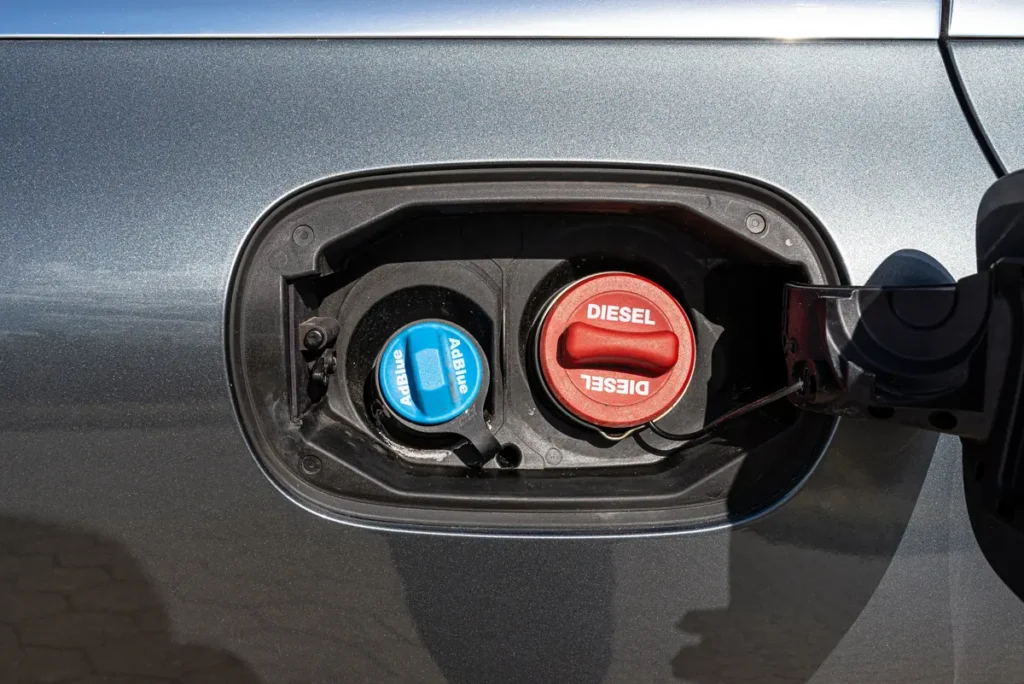
When a petrol car stores P0455, the ECU has tried to seal the fuel vapour system for a self test and found it could not hold any meaningful pressure at all. Something is wide open. Of the common evaporative emission codes this is by a distance the easiest to track down, and the most frequent cause of all costs nothing to rule out: the fuel cap.
What the code actually means
Your car does not vent its petrol tank to the outside world. Vapour coming off the fuel is captured in a canister of activated charcoal, held there, and drawn into the engine through the purge valve to be burnt while you drive. It is a closed loop with one deliberate breathing point, the vent valve, and the ECU can shut that valve whenever it wants to check the loop is intact.
That check is what produces these codes. Depending on the manufacturer, the ECU either uses manifold vacuum to draw the sealed system below atmospheric pressure or a small pump to push it above, then closes everything and watches the fuel tank pressure sensor. A sound system holds. A leaky one drifts back towards atmospheric, and how fast it drifts is what separates one code from another.
P0455 sits at the far end of that scale. It is not a slow drift but a failure to hold anything worth measuring, described by most manufacturers as a gross or large leak. A hose lying off its stub is a large leak. A missing cap is a large leak. A pinhole in a canister is not.
One thing to settle before going further: this is a petrol car system. Diesel does not evaporate in the same way and diesel cars have no charcoal canister or purge valve, so the code has no meaning on one.
The scale, plainly
Think of the difference between a tyre with a slow puncture and a tyre with the valve core removed. Small leak codes describe a system that empties over minutes. P0455 describes one the ECU could not pressurise in the first place.
Symptoms you’ll actually notice
- The engine management light, which is usually what brings you here.
- A smell of petrol, especially at the rear of the car, in a garage, or after parking on a warm day.
- No change in how the car drives. Power, idle and economy are unaffected on almost all cars.
- EVAP readiness showing as incomplete on a scan, which matters when a test is due.
That fuel smell is the one real difference from a small leak, which gives no symptom whatsoever. If you can smell petrol, treat it as urgent rather than leaving it to the next service. Vapour near a hot exhaust is not something to live with, and a hose that has come adrift may also be chafing somewhere else.
Likely causes, cheapest first
| Cause | Typical part cost | Why it’s on the list |
|---|---|---|
| Cap missing, loose, cross threaded or the wrong cap | £0 to £20 | The most common single cause. A generic cap often has the wrong seal profile and will not seal to the standard the test needs. |
| Vapour hose off its stub or split open | £0 to £25 | Low pressure push fit joints. One knocked off during other work gives exactly this result. |
| Purge valve stuck open | £20 to £70 | Jammed open, the system can never be sealed. Often comes with a rough idle, which sets it apart. |
| Vent valve stuck open | £25 to £80 | Its job is to seal the system for the test. If it will not shut, the ECU is pressurising an open system. |
| Charcoal canister cracked or broken | £60 to £180 | Mounted low and made of plastic, so kerb strikes and corroded brackets take their toll. |
| Fuel level sender or tank flange seal leaking | £20 to £120 | The large rubber seal on top of the tank hardens with age and can lose its grip entirely. |
| Filler neck rotted or tank damaged | £80 to £300 plus fitting | Salt, age and stone damage, mostly on older cars. |
The ordering is about odds as much as price. A large opening tends to be something that has come apart rather than something that has worn out, so start where the system gets opened routinely and then move to the joints most likely to have been disturbed. It is common for this code to appear within a week of a service, a fuel pump job or rear suspension work, because a vapour line was unclipped and never pushed fully home.
Quick check
Unscrew the cap and look at the threads and the rubber seal. Confirm it is the right cap for your car and not a spare off something else. Refit it and turn until it clicks properly home, usually two or three clicks. Then check the sealing face on the filler neck for rust flakes, a split lip or a bit of grit. Two minutes, no tools.
Narrowing it down with live data
A gross leak leaves clear fingerprints. Start with the fuel tank pressure sensor: on a healthy system, sealing the vent and running the purge produces a visible move away from atmospheric, whereas with a large leak the reading barely twitches and then sits flat. That flat trace is your confirmation, and it also argues against the sensor being at fault, since a sensor reporting a false leak normally shows a plausible pressure change followed by an implausible loss.
Watch the commanded state of the vent and purge valves alongside it. If the vent is commanded closed and pressure still refuses to move, either the valve is not closing or there is a large hole beyond it. A purge valve stuck open announces itself differently: short term fuel trim at idle wanders and the engine speed goes slightly unsteady.
Freeze frame narrows things further and costs nothing to read. The useful entries here are fuel level and how recently the engine had been started. A fault captured at a high fuel level right after a fill points hard at the cap or the neck; one captured across all sorts of levels points deeper into the system. Live data and freeze frame need the Enhanced edition or above rather than Standard, and there are video tutorials covering how to read them.
Where a small leak really does need a smoke machine, a large one often does not. A torch and twenty minutes will frequently find it, because the opening is big enough to see. Follow the vapour lines forward from the top of the tank, check each push fit joint is fully seated, and look for a hose end sitting loose in a wheel arch. That is the practical reason this is the friendliest code in the EVAP family.
Garage bill versus doing it yourself
| Job | Typical UK garage | DIY parts only |
|---|---|---|
| Supply and fit the correct fuel cap | £15 to £35 | £8 to £20 |
| Refit or replace a vapour hose | £40 to £90 | £5 to £25 |
| Replace the purge valve | £70 to £160 | £20 to £70 |
| Replace the vent valve | £70 to £180 | £25 to £80 |
| Replace the charcoal canister | £180 to £450 | £60 to £200 |
Most UK garages charge diagnosis as about an hour of labour, running from roughly £50 at a small independent to well past £120 at a franchised dealer. Parts vary just as much by car, so read every figure as an indication rather than a price. What makes a large leak cheap in practice is that the diagnostic hour is often unnecessary: check the cap and walk the hoses yourself and you may arrive already knowing what needs doing.
When this is a DIY job and when it isn’t
Well within reach at home
Caps and accessible hoses, without question. Purge valves usually sit in the engine bay on a bracket with two bolts and one connector, a sensible first repair for anyone who has changed a filter. Reseating a vapour line is often just pushing it home until the collar clicks.
Better left to a garage
Anything involving the tank. Replacing a fuel level sender seal means opening the top of a tank containing petrol, and the saving is not worth the risk. The same applies to a corroded filler neck and to canisters buried behind arch liners with seized fixings. If you can smell fuel but cannot find its source, stop and let someone with a lift look at it.
Clearing the code the right way
Repair, then clear. Clearing first hides your evidence and achieves nothing, and with a gross leak the code usually returns within a drive or two anyway, because the large leak monitor runs far more readily than the fine leak test does.
Use that quick return as your test result. Fit the new cap, clear the code, drive normally, and if the light stays off through several cold starts and a couple of fill ups the repair has held. Watch for pending codes rather than waiting for the lamp: a pending code means the ECU has seen the failure once and is waiting to confirm it, so it tells you the fault is still live several days earlier than the light will. A stored code with the lamp on means it is already confirmed.
Where the MOT comes into it
An evaporative leak has no effect on how the car drives, which leads people to assume it can be ignored. It cannot, because on a petrol car first used from July 2003 the lamp is itself an inspected item, and one still lit is a Major defect whatever the cause. A cap that will not seal fails the car exactly as a serious engine fault would. Resetting just before the test makes things worse, since it also wipes the readiness monitors, and incomplete monitors are a giveaway, much as an American emissions check fails a car both for a lit lamp and for unset monitors.
Read the stored and pending codes yourself
AutoScan Standard reads and clears stored and pending fault codes on Windows through an ELM327 lead, with a database of 14,309 codes and a licence key that does not expire.
Read it yourself
Stop guessing at the code
AutoScan reads the fault straight out of your car and tells you what it means in plain English, on your own Windows laptop. The trial reads real codes before you pay anything.
Keep reading
Related guides
P0128 Coolant Thermostat: Why the Engine Never Warms Up
P0128 means your engine is not reaching its expected temperature in the expected time. What that costs in fuel and wear, how…
P0401 EGR Flow Insufficient: Carbon, Cleaning and Costs
Why the EGR system exists, how the ECU works out that too little exhaust gas is getting through, and when cleaning the…
P0300 Random Misfire: What Causes It and How to Find It
Why a random misfire code almost always points at something every cylinder shares, how the ECU detects it, and the order to…