
P0301 Cylinder 1 Misfire: Find the Cause Before Buying Parts
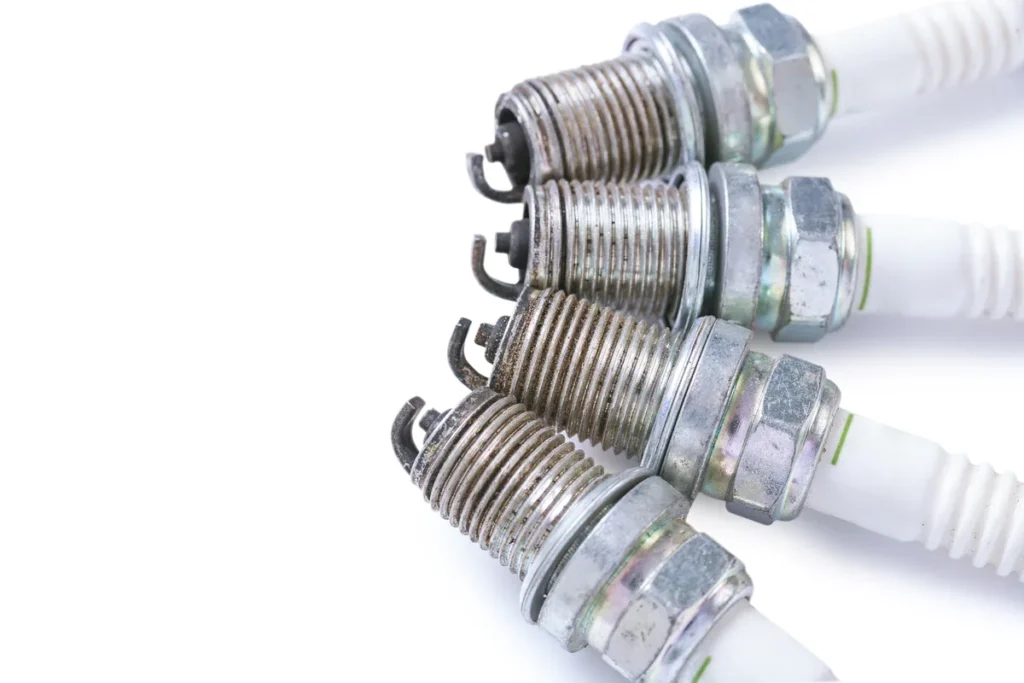
P0301 says one cylinder, number one, is not contributing what the ECU expects. A single-cylinder code is one of the easiest faults on a modern car to prove rather than guess, because you can physically move parts between cylinders and watch the code follow them. Do that before you buy anything and you will usually spend under fifty pounds instead of several hundred.
What the code actually means
The ECU cannot see combustion. What it can see, through the crankshaft position sensor, is how the crank speeds up on each power stroke. Every firing cylinder gives it a measurable nudge. When a cylinder fails to burn its charge that nudge is missing and the crank momentarily slows, by an amount far too small to feel but easily large enough for the sensor to register.
Knowing the firing order and the exact crank angle, the ECU attributes each missing kick to a specific cylinder and keeps a separate misfire counter for each. P0301 is set when the counter for cylinder one crosses the manufacturer’s threshold within a set number of revolutions while the others stay quiet.
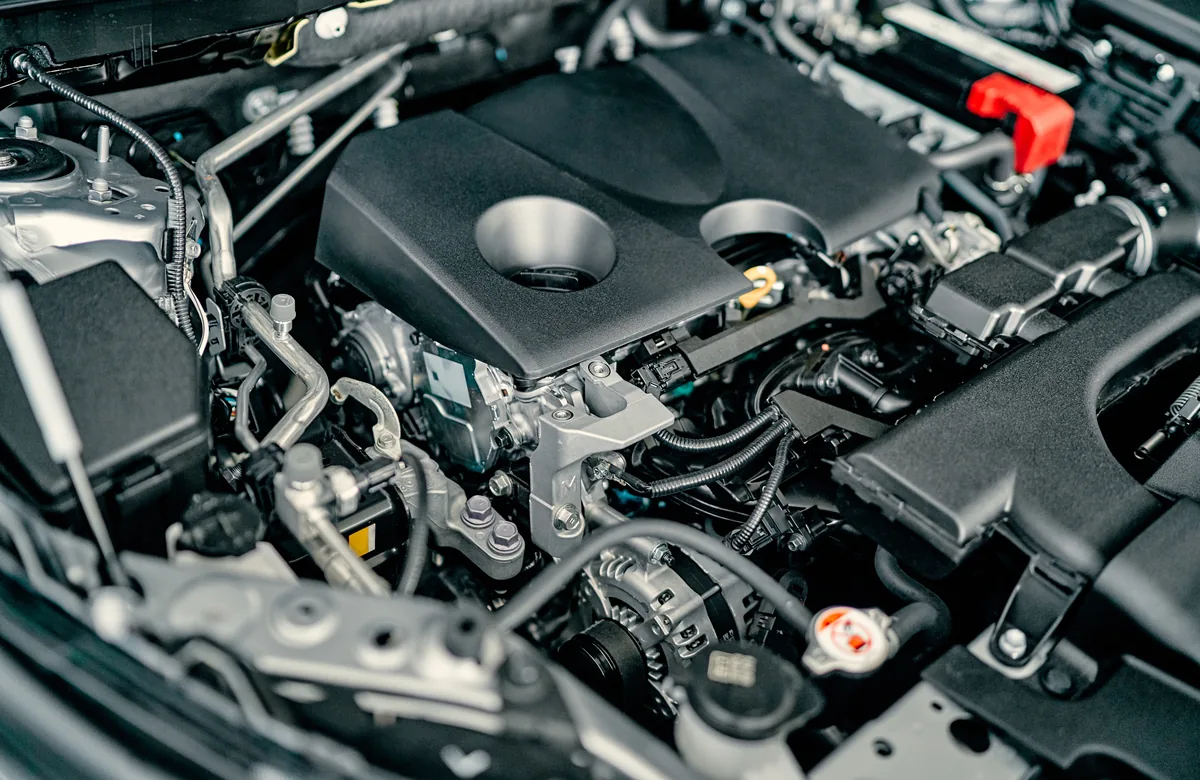
Cylinder one is not always at the front. On transverse engines it is often at the timing-belt end, and on a V engine it sits on bank one, which varies by manufacturer. Check your car’s layout before pulling anything off.
A misfire on one cylinder still dumps raw petrol into the exhaust, where the catalytic converter tries to burn it, climbs well past its design temperature and can be destroyed on a fairly short journey.
Flashing light, no driving
If the engine management light is flashing rather than steady, the misfire is live and severe and the converter is being damaged as you watch. Stop somewhere safe and arrange recovery. A steady lamp says a fault was recorded rather than that one is happening now, so a short careful drive to a garage is reasonable, but do not leave it for weeks.
Symptoms you’ll actually notice
A dead cylinder is hard to miss on a four-cylinder engine and less obvious on a six or eight, where the others cover for it.
- An uneven idle with a rhythmic shake, worst when stationary in gear
- Hesitation on pull-away and a flat feeling at full throttle
- A drop in fuel economy, since the ECU keeps fuelling a cylinder that is not paying its way
- A faint smell of petrol from the exhaust after idling
- Occasionally nothing beyond the light, if the misfire only occurs cold or under heavy load
Likely causes, cheapest first
| Cause | Typical part cost | Why it’s on the list |
|---|---|---|
| Spark plug: worn electrode, wrong gap, wrong heat range, oil fouling | Roughly £4 to £15 | The most common single-cylinder culprit, and the only one you can read evidence from. A plug soaked in oil also points at valve stem seals or rings. |
| Ignition coil or HT lead for that cylinder | Roughly £20 to £120 | Coil-on-plug units fail one at a time, exactly what a single-cylinder code looks like. |
| Coil connector or wiring: corroded pins, chafed loom, loose plug | £0 to roughly £25 for a repair kit | Costs nothing to check, and years of heat cycling work connectors loose. Often mistaken for a failed coil. |
| Fuel injector: partly blocked, sticking, or an open winding | Roughly £30 to £180 | Less common than ignition faults but genuine, and swappable between cylinders. |
| Localised vacuum leak at that intake runner or an injector seal | Roughly £5 to £40 | A leak at one port leans out one cylinder only. |
| Low compression: burnt or tight valve, worn rings, head gasket | Several hundred pounds upwards | Least likely and most expensive, and where you end up if the code refuses to move with the parts. |
People routinely start at the bottom of that table, because new injectors feel like a decisive repair and a spark plug feels too trivial to be the answer to a warning light. Reality runs the other way: plugs, coils and their connectors account for the great majority of single-cylinder misfires, and together cost less than an hour of diagnostic labour.
The swap test, done properly
This is the single most valuable thing you can do with a P0301, and it costs nothing but time. With the engine cold and the ignition off, remove the ignition coil from cylinder one and the coil from cylinder two. Fit cylinder one’s coil onto cylinder two and cylinder two’s coil onto cylinder one, reconnecting both plugs properly. Now clear the stored code so the ECU counts fresh, and drive the car the way it was being driven when the fault appeared.
Read the codes again. If it now sets P0302, the fault physically moved with the coil, and the coil is the faulty part. If it still sets P0301, the coil is fine and the problem stays with cylinder one, which points at the plug, the injector, the wiring to that cylinder, or something mechanical in the bore.
The same logic works for injectors, though it is messier and worth doing only once the ignition side is cleared. Swap the injector from cylinder one into cylinder two, fit fresh seals, clear the code and drive. A code that becomes P0302 identifies the injector; one that stays rules it out.
Change one thing at a time
The swap test only works if a single variable moves. Replace the plug, swap the coil and clean the injector in the same afternoon and you end up with a running engine and no idea what was wrong, which means no idea whether it will come back. Swap, clear, drive, read. Then the next thing.
Narrowing it down with live data
Where your car supports per-cylinder misfire counters, they beat the code itself. The code says cylinder one crossed a threshold at some point; the counters say whether it is picking up one misfire a minute or two hundred, and whether cylinders two and three have quietly started counting too.
Watch the counters while you vary conditions. A count that climbs only at idle and stops under load usually means a weak spark or a small leak overwhelmed once cylinder pressure rises. One that is clean at idle and runs away under acceleration points at an ignition component breaking down under higher voltage demand, the classic behaviour of a coil that tests fine on the bench.
Keep short-term and long-term fuel trim on the same screen. A misfiring cylinder pushes unburnt oxygen past the upstream lambda sensor, the sensor reports lean, and the ECU adds fuel across that bank. Positive trim on one bank only confirms the problem is on that side of the engine.
Freeze frame records what the fault was captured under: engine speed, calculated load, coolant temperature and road speed. A P0301 logged at idle on a cold engine and one logged at 4,000 rpm on a hot motorway run are different faults with different shortlists. Live data and freeze frame come with AutoScan Enhanced and the editions above it, rather than the code-reading Standard licence.
Garage bill versus doing it yourself
| Job | Typical UK garage | DIY parts only |
|---|---|---|
| Diagnosis of a single-cylinder misfire | Roughly £50 to £120 | Free with your own scan tool and a swap test |
| One ignition coil supplied and fitted | Roughly £90 to £250 | Roughly £25 to £120 |
| Full set of spark plugs | Roughly £70 to £160 | Roughly £20 to £60 |
| One fuel injector supplied and fitted | Roughly £150 to £400 | Roughly £30 to £180 plus seals |
| Compression test across the engine | Roughly £60 to £150 | Roughly £30 to £70 for a gauge |
Most UK garages price diagnosis at around an hour of labour, with rates running from well under £70 at a small independent to considerably more at a main dealer, plus a wide regional spread. Parts move just as much: a coil for a hatchback and one for a German six are not the same money.
When this is a DIY job and when it isn’t
Well within reach
On most coil-on-plug engines the coil is held by a single bolt and a connector, and the plug comes out with a long extension and a plug socket. Two things to respect: plugs have a specified torque and aluminium heads are unforgiving, and coil boots need a smear of the correct grease rather than being forced on dry. Buy the plug specification your car calls for and check the gap before fitting.
Better left to a garage
Injectors on direct-injection engines run at very high pressure, need the fuel system depressurising properly, and often use single-use seals and a set fitting procedure. Some cars want an injector coding afterwards with a manufacturer-level tool. If the code has survived a coil swap, an injector swap and a fresh plug, stop spending and get a compression test done.
Clearing the code the right way
Clearing is part of the test, not the repair. During a swap test you clear deliberately, so the ECU starts counting from zero and you learn which cylinder it lands on next. Outside of that, clear only once the repair is complete.
Pending codes matter here. The ECU flags a fault as pending on first detection and promotes it to stored, with the lamp lit, when it sees it again, so a pending P0301 after a repair warns you the fix was partial. Clearing also wipes the readiness monitors, the self-checks the emissions systems run while you drive, and those need a varied drive cycle over a day or two to reset.
What it means for your MOT
A lit engine management lamp fails the MOT by itself on any petrol car first used from July 2003, and a persistent misfire can push tailpipe emissions over the limit at the same test. (A US emissions or smog check fails the same way, on the lamp and on incomplete monitors.) Clearing the code on the way to the test station swaps one failure for another. Sort the misfire, drive normally for a couple of days, then book it.
Watch the code move during a swap test
Reading codes between swaps is what turns guesswork into proof, and the tutorial library walks through connecting an ELM327 lead and pulling stored codes step by step.
Read it yourself
Stop guessing at the code
AutoScan reads the fault straight out of your car and tells you what it means in plain English, on your own Windows laptop. The trial reads real codes before you pay anything.
Keep reading
Related guides
P0171 System Too Lean (Bank 1): Causes and Real Fix Costs
What a lean code on bank 1 really tells you, how to read fuel trim properly, the causes in order of likelihood…
P0455 Large EVAP Leak: Start With the Fuel Cap
A large evaporative leak is the one EVAP fault you can often find yourself in five minutes, and the fuel cap is…
P0128 Coolant Thermostat: Why the Engine Never Warms Up
P0128 means your engine is not reaching its expected temperature in the expected time. What that costs in fuel and wear, how…