
P0446 EVAP Vent Control Circuit: What to Check First
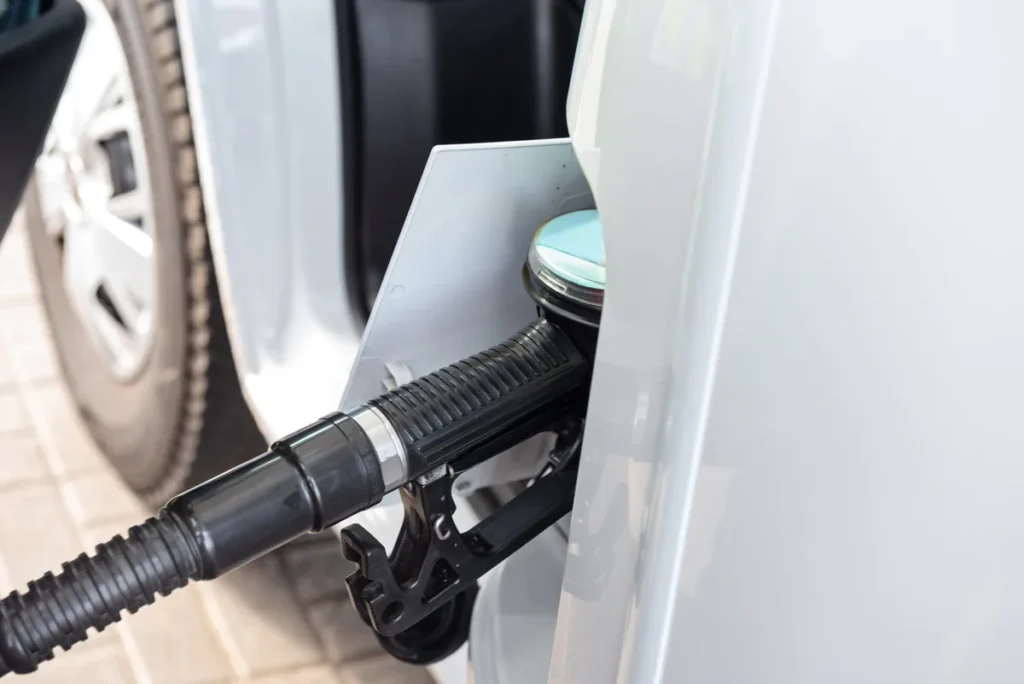
Unlike most evaporative emission codes, P0446 is not telling you the system has a hole in it. The ECU tried to operate the vent valve, the component that seals the fuel vapour system for testing, and the result was not what it expected. That could be the valve, its wiring, its connector, or something far more mundane blocking it. This is a control fault on a petrol car, and it pays to treat it as one.

What the code actually means
Start with what the vent valve is for. Petrol vapour from the tank is stored in a charcoal canister rather than released into the air, and the engine burns it off through the purge valve as you drive. For the canister to work it has to breathe: as vapour is drawn out, clean air must come in behind it. The vent valve is that breathing hole, and in normal running it sits open.
It closes only when the ECU wants to test for leaks, sealing the tank, hoses and canister into one volume before using manifold vacuum or a pump to move the pressure and watching the fuel tank pressure sensor to see whether it holds. Without a working vent valve there is no test, which is why the ECU cares whether it can control the thing.
P0446 is what it stores when that control goes wrong: a circuit reading outside its expected range, a valve that does not appear to have moved when commanded, or a pressure response that makes no sense for the command given. It is a component and circuit code, not a leak code, and that changes where you look.
Two things follow. None of this applies to a diesel, which has no canister, purge valve or vent valve, so the code belongs to petrol cars only. And the vent valve is almost always mounted low down towards the rear of the car, out in the weather, which tells you a lot about how it fails.
Where it sits, and why that matters
On most cars the vent valve lives under the boot floor, beside the rear axle, or bolted to the canister in a wheel arch. It spends its life in road spray and winter salt. Very few of these faults are electronic failures of a good component in a clean place.
Symptoms you’ll actually notice
- The engine management light, which for many people is the only outward sign.
- The pump nozzle repeatedly clicking off while you refuel, with the tank nowhere near full.
- A hiss or rush of air when the filler cap is loosened, because tank pressure has had nowhere to go.
- No difference in how the car drives. Power, economy and idle are normally untouched.
- EVAP readiness never completing, because the ECU cannot run the test it needs the vent valve for.
That refuelling symptom is worth dwelling on, because drivers usually notice it weeks before the light appears. Fuel going into the tank displaces vapour, which is meant to travel to the canister and out through the open vent. If the vent is blocked, that vapour has nowhere to go, pressure builds in the filler neck, fuel backs up and the nozzle’s automatic shutoff reads it as a full tank. Anyone who has squeezed the trigger in five second bursts at a forecourt has met this fault.
Likely causes, cheapest first
| Cause | Typical part cost | Why it’s on the list |
|---|---|---|
| Vent blocked by dirt, road debris, spiders or an insect nest | £0 | Common and free to check. The vent draws air from under the car, and the opening is an attractive place for a spider to build. |
| Corroded or loose connector at the valve | £0 to £10 | A low mounted plug in constant road spray. Green pins give exactly the erratic reading that sets this code. |
| Chafed or broken wiring to the valve | £5 to £30 | The harness runs under the car and gets pinched by heat shields and jacking damage. |
| Canister filter clogged | £20 to £60 | Where fitted, this is the vent’s air filter. Restrict it and the ECU sees a valve that will not open. |
| Valve seized by corrosion or road salt | £25 to £90 | The solenoid can be electrically fine while the mechanism is welded solid with rust. |
| Vent solenoid failed internally | £25 to £90 | Open or shorted windings. Possible, but well below the reasons above. |
| Fault in the ECU driver circuit | Several hundred pounds | Rare. Only worth considering once valve, harness and connector are proven good. |
The first three items cost nothing but time, and between them they account for a large share of real world repairs. There is a well worn path where someone reads a code with the word circuit in it, assumes an electrical component has failed, and buys a solenoid. The new valve goes on, the code returns a fortnight later, and the actual fault was a corroded pin or a nest of cobwebs. Look before you order.
Quick check
Get the car safely raised, find the vent valve near the charcoal canister and unplug the connector. Look for green or white corrosion on the pins and check the seal has not perished. Then look at the valve’s air inlet, or its filter if it has one, and clear out anything living in it.
Narrowing it down with live data
The most direct test is an actuation. Many scan tools can command the vent valve open and closed, and a working solenoid clicks audibly. Standing at the rear of the car while someone triggers it is crude but decisive: a click means the coil is energising and the driver circuit is doing its job, which points at a mechanical restriction. Silence points at the coil, the wiring or the connector.
Then watch the fuel tank pressure sensor while the vent is commanded closed and the purge opened. A vent that is sealing lets the pressure move away from atmospheric in a controlled way. A vent stuck open leaves the reading flat, because you are pulling vacuum on a system that is still breathing. A vent stuck shut does the opposite, swinging too far and taking a long time to settle.
Freeze frame adds context. It stores the conditions when the fault was captured, and the clues here are ambient temperature and whether the engine was cold. A code that appears on frosty mornings but never in July suggests moisture in a connector or ice in a restricted vent, a very different repair from a failed solenoid. One that appears in all weather is more likely a chafed wire moving with the suspension. Live data and freeze frame need the Enhanced edition or above rather than Standard, and the free trial download confirms the software installs and connects before you choose.
Read the other codes too. P0446 on its own points at the valve and its circuit; alongside a leak code the picture changes, because a vent that cannot close fails a leak test as a side effect, and fixing the vent may clear both.
Garage bill versus doing it yourself
| Job | Typical UK garage | DIY parts only |
|---|---|---|
| Clear a blocked vent or filter | £40 to £90 | £0 to £15 |
| Repair a corroded connector or damaged wire | £40 to £110 | £5 to £20 |
| Replace the vent valve | £70 to £180 | £25 to £90 |
| Replace a canister with an integral vent valve | £200 to £500 | £70 to £250 |
Diagnostic work in the UK is usually billed as about an hour of labour, from roughly £50 at a small independent to well over £120 at a franchised dealer. Parts differ hugely between a mainstream hatchback, where the valve is a cheap standalone item, and cars where the manufacturer supplies it only as part of a complete canister. Establish which you are dealing with before deciding whether to attempt the job.
When this is a DIY job and when it isn’t
Sensible to attempt yourself
Inspecting and cleaning the vent, remaking the connector and replacing a standalone valve are all reasonable at home if you can get the car safely on ramps or axle stands. The valve is typically held by a bracket or grommet with a couple of hose connections and one plug. Photograph it before you disturb the hoses, and expect corroded fixings.
Leave it to a garage
If the vent valve is integrated into the canister and that canister sits above the tank or behind a bonded arch liner, this stops being a bracket and two hoses. Anything that means lowering the tank belongs on a lift. The same goes for a wiring fault you cannot trace: chasing an intermittent break along the underbody is slow, and a garage with a wiring diagram will beat guesswork.
Clearing the code the right way
Repair first, then clear. Clearing a control code before you have changed anything simply removes your evidence, and the ECU normally re-tests the vent valve within a drive or two, so the light reappears quickly. That is useful rather than annoying. Clean the vent or remake the connector, clear the code, then drive for a few days including some cold starts. If nothing comes back and the EVAP readiness monitor completes, you have a genuine fix. If it returns, you have narrowed the field for the price of a week.
Keep the pending and stored distinction in mind. A pending code means the ECU has seen the failure once and not yet confirmed it, which is your early warning that the repair has not held. A stored code with the light on has failed enough times to be certain. Clearing purely to make a light go out also destroys the freeze frame data that would have helped.
The MOT and emissions angle
It is easy to shrug off a fault that has no effect on how the car drives, and on most vehicles this one has none. The catch is the light. In the UK an illuminated engine management light is an MOT failure in itself, so a spider’s web in a vent fails your car as effectively as a serious engine problem. The fault also stops the EVAP readiness monitor ever completing, and unset monitors are a fail in their own right at a US emissions check. Repair the vent, let the monitors run, then present the car.
Not sure which edition you need
Standard reads and clears stored and pending codes. Enhanced adds live data from over 90 sensors and freeze frame, which is what you want for actuating a valve and watching tank pressure.
Read it yourself
Stop guessing at the code
AutoScan reads the fault straight out of your car and tells you what it means in plain English, on your own Windows laptop. The trial reads real codes before you pay anything.
Keep reading
Related guides
P0340 Camshaft Position Sensor Circuit: Checks That Save Money
What the ECU is missing when it sets a cam sensor circuit code, how it differs from a crank sensor fault, and…
P0011 Cam Timing Over-Advanced: Start With the Oil
Variable valve timing runs on engine oil, so this code often comes down to oil condition rather than a worn phaser. Here…
P0016 Timing Correlation: Why a New Sensor Won’t Fix It
P0016 is a mechanical timing fault far more often than a sensor fault. Here is what the ECU compared, what usually causes…