
P0505 Idle Air Control: Causes, Cleaning and Relearns
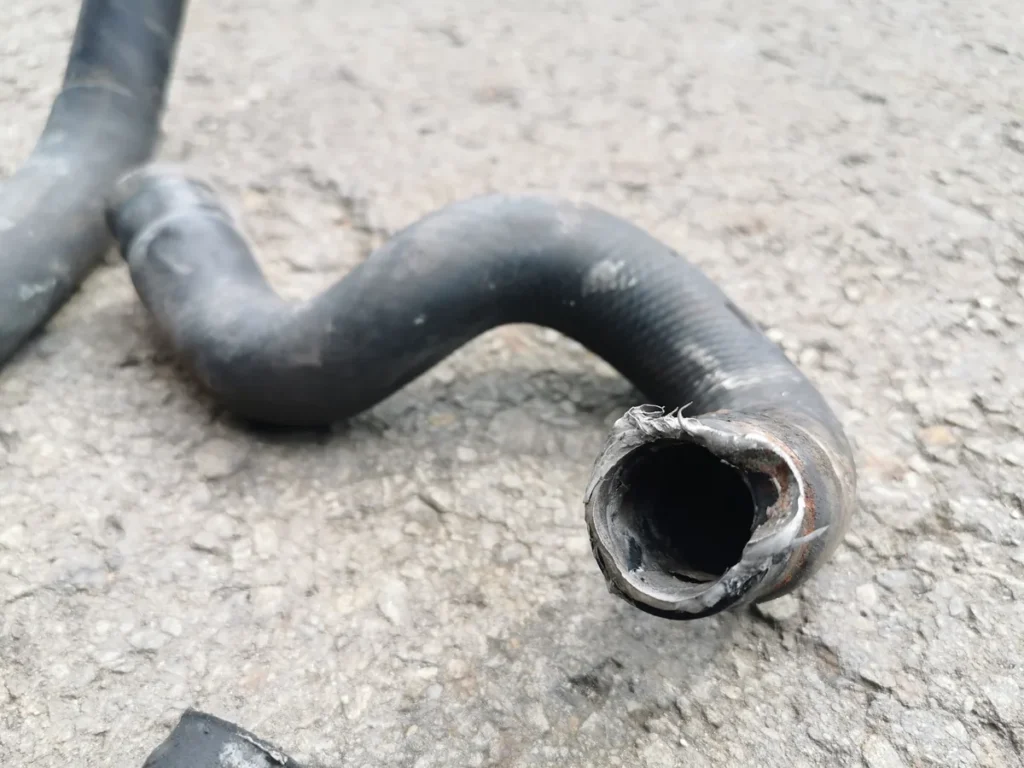
P0505 means the ECU has decided the idle air control system is not doing what it was asked to do. It names the system, not the culprit. On an older car that system is a small valve that meters air around a closed throttle; on anything reasonably modern it is the electronic throttle body itself. In both cases the usual reason is not a dead part but a passage full of carbon, which is one of the cheaper faults you can be handed.
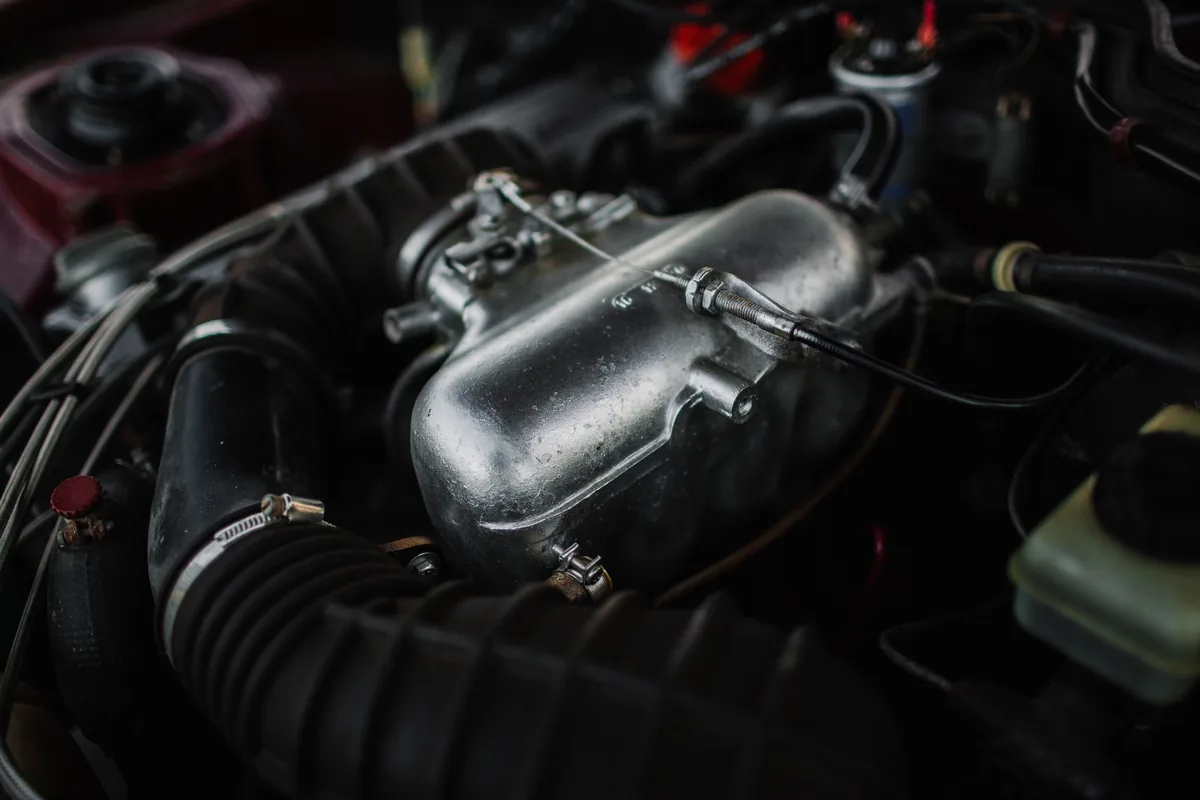
What the code actually means
An engine at idle needs a small, precisely controlled amount of air. Too little and it stalls, too much and it races. The complication is that the demand keeps changing: switch on the air conditioning, put the heated rear screen on, turn the steering to full lock, select drive in an automatic, and the load on the engine rises. The ECU has to add air to compensate, and it has to do it before the driver notices anything.
On cars up to roughly the mid 2000s that job belonged to a dedicated idle air control valve. The throttle butterfly closes completely when your foot is off the pedal, and the valve opens a bypass passage that lets a metered trickle of air past it. The ECU moves the valve, usually a stepper motor or a solenoid, and watches the resulting engine speed.
Newer cars have no separate valve. The accelerator pedal is an electronic sensor, the throttle plate is moved by a motor, and idle air is controlled by holding the throttle plate a fraction of a degree open. The principle is unchanged and so is the code: the ECU commands a position, expects a certain result, and stores P0505 when the two do not match.
That mismatch can be electrical or physical. An open circuit to the valve, a corroded connector or a failed motor are the obvious electrical causes. Physically, a passage restricted by carbon simply cannot flow the air the ECU is asking for, so the commanded position and the actual airflow diverge. There is a third possibility that catches people out: if there is an unmetered air leak somewhere, the ECU tries to close the idle path down to compensate, runs out of adjustment at the closed end, and flags the system as out of range even though the valve is fine.
Worth noting that this is essentially a petrol engine code. Diesels have no throttle butterfly controlling idle in the same way and set their idle speed by fuelling, so if you are looking at a diesel, idle problems will normally show up under different codes.
The distinction that saves money
P0505 says the idle control system failed to achieve what was asked of it. It does not say the idle control valve is broken. Carbon, air leaks and wiring are all capable of producing this code with a perfectly healthy valve fitted.
Symptoms you’ll actually notice
- An idle that hunts or surges, drifting up and down by a few hundred RPM instead of settling.
- Stalling when you lift off approaching a junction, or when the air conditioning compressor cuts in.
- An idle that is too high or too low and stays there, sometimes only when cold.
- A brief dip in revs when the steering is turned to full lock or a heavy electrical load comes on, where the engine used to hold steady.
- Difficult starting, particularly a car that fires and immediately dies unless you touch the throttle.
- The engine management light, though on some cars the idle behaviour is noticed long before the lamp appears.
Likely causes, cheapest first
| Cause | Typical part cost | Why it’s on the list |
|---|---|---|
| Carbon build-up in the throttle body or idle bypass passage | £5 to £12 for cleaner | The most common cause by a wide margin, especially on cars used mainly for short journeys. Soot from the crankcase breather bakes onto the throttle bore and narrows the very passage the ECU relies on. |
| Vacuum leak on a hose or gasket | £5 to £40 | Unmetered air forces the ECU to close the idle path further than it can, so the system reports itself out of range. Perished breather hoses are a favourite. |
| Corroded connector or chafed wire at the valve or throttle body | £5 to £30 | Costs almost nothing to check and produces intermittent faults that look exactly like a failing component. |
| Dirty or sticking idle air control valve | £25 to £90 | On older cars the valve pintle gums up with oily deposits. Often recoverable with a clean rather than replacement. |
| Failed idle air control valve motor or solenoid | £30 to £120 | A genuine failure does happen, but it belongs below the cleaning and wiring checks rather than above them. |
| Throttle position sensor out of range | £25 to £90 | If the ECU cannot trust its position feedback, it cannot confirm the idle command was carried out. |
| Electronic throttle body assembly failed | £90 to £350 | The expensive answer. Sometimes correct on a high mileage car, but only after everything above has been eliminated. |
People tend to work that table from the bottom upwards, because the throttle body is the part with a name and a part number and it feels like a proper repair. It is also the part most likely to be unnecessary. Cleaning costs the price of a tin of throttle body cleaner and an hour of your Saturday, and on a car with 90,000 miles of town driving it resolves a good proportion of these faults on its own. Try it before you spend anything meaningful.
Narrowing it down with live data
This is a fault where watching the numbers separates the candidates quickly. Start with RPM and the idle air control position, which may be shown as a step count, a percentage or a duty cycle depending on the car. Let the engine idle warm and watch how they relate. A healthy system settles: the position parameter finds a value and stays roughly there while the RPM sits steady. A system fighting a problem hunts, with the position climbing and falling as the engine speed swings.
Then load the engine deliberately. Switch on the air conditioning, the headlights and the heated rear screen, and turn the steering to full lock. You should see the idle air control position open up and the RPM barely move. If the position command changes and the RPM drops anyway, the commanded air is not arriving, which points at a restriction or a stuck valve rather than a control fault.
Fuel trims tell you whether an air leak is behind it. If short and long term trims at idle are noticeably positive, the ECU is adding fuel to cope with extra air it did not measure, and long term trim above roughly ten per cent at idle is worth chasing before you touch the throttle body. Trims that look normal at idle but a valve position pinned at one end of its range point back at the valve or its passage. Throttle position should also read consistently: a closed throttle value that wanders or jumps while your foot is nowhere near the pedal is a sensor problem, not an airflow one.
Freeze frame is worth reading before you start any of this. It captures the conditions when the fault was recorded, and coolant temperature is the most telling entry. A fault always captured at low coolant temperature suggests a cold start enrichment or a valve that sticks until it warms through, which is a different job from one captured at full operating temperature under electrical load. Live data and freeze frame come with AutoScan Enhanced and above rather than the Standard edition.
Quick check
With the engine off, take the intake pipe off the throttle body and look inside with a torch. Push the throttle plate open with a clean finger. If you can see a hard black ring of carbon around the edge of the bore or in the small bypass port beside it, you have found something worth cleaning before you spend money on parts.
Garage bill versus doing it yourself
| Job | Typical UK garage | DIY parts only |
|---|---|---|
| Throttle body clean and relearn | £50 to £110 | £6 to £12 |
| Trace and replace a leaking vacuum hose | £50 to £130 | £5 to £40 |
| Clean or replace an idle air control valve | £80 to £180 | £30 to £120 |
| Replace a throttle position sensor | £70 to £160 | £25 to £90 |
| Replace an electronic throttle body | £180 to £480 | £90 to £350 |
Most UK garages price diagnosis at around an hour of labour, and the hourly rate runs from roughly £50 at a small independent to over £120 at a main dealer, with real differences between regions. Parts prices are just as variable, and throttle bodies in particular range from an affordable aftermarket unit on a common hatchback to a genuine part on a German saloon that costs several times as much. Take every figure here as a guide rather than a quote.
When this is a DIY job and when it isn’t
Fair game at home
Cleaning is the obvious one. Remove the intake pipe, spray throttle body cleaner onto a lint free cloth rather than blasting it straight into the bore, and work the deposits off the throttle plate and the bore around it. Do not scrape with anything metal, because many throttle bodies have a coating that is there deliberately and removing it causes a permanently wrong idle. Checking vacuum hoses and remaking a corroded connector are equally approachable, and on older cars a bolt-on idle air control valve is a straightforward swap.
Where it gets awkward
Anything where the throttle body is buried under the inlet manifold, or where the car requires a specific relearn procedure that only a scan tool can trigger. Drive-by-wire cars in particular can be left with a hopeless idle after cleaning if the adaptation is not reset, and on some models attempting to force it by disconnecting the battery makes things worse. If your car needs a tool-driven throttle adaptation and you do not have one, budget for a garage visit at the end of the job rather than discovering it afterwards.
The relearn, in plain terms
An electronic throttle body learns its own closed position over time and stores that as an adaptation value. Clean it, and the mechanical closed position moves, but the stored value does not, so the ECU is now working from a picture of a dirty throttle that no longer exists. The result is an idle that is too high, too low or hunting, and a driver who concludes that cleaning made it worse. The fix is a throttle or idle relearn, which on some cars is a set procedure of ignition cycles and pedal positions, and on others must be commanded with a scan tool. Find out which applies to your car before you start.
Clearing the code the right way
Fix, then clear, and do it in that order every time. With this code there is an extra reason: clearing also wipes the learned idle adaptations on many cars, which is helpful after a clean and unhelpful if you have changed nothing, because the engine then has to relearn from scratch and may idle oddly for a day or two for no good reason.
Pending and stored codes matter here too. A pending code means the ECU has failed the test once and is watching; a stored code with the lamp lit means it has confirmed the fault. After a clean and a relearn, watching for a pending code over the next few days is a faster and more honest check than waiting for the light to come back.
If the code does return, that is information rather than failure. It tells you the cleaning was not the whole story and that it is time to go looking for the air leak or the wiring fault you skipped. What you should never do is clear the code to make the light go away with the fault still present, both because it will return and because you lose the freeze frame data that would have helped.
The MOT angle
Idle control problems can push emissions out at the test, but the simpler issue is the lamp. An engine management light that is on constitutes an MOT failure in the UK on its own terms, regardless of whether the engine runs well otherwise, and the same is true of an American emissions test, which will also fail a car whose readiness monitors have not completed. Clearing the code on the way to the test station therefore backfires twice over: the monitors reset, and the fault comes back anyway. Sort the idle properly, drive the car for a few days so the monitors set, then book it in.
Want to see the process before you buy anything
There are 13 video tutorials covering connecting an ELM327 lead, reading codes and working with live data, so you can see how the software behaves on a real car.
Read it yourself
Stop guessing at the code
AutoScan reads the fault straight out of your car and tells you what it means in plain English, on your own Windows laptop. The trial reads real codes before you pay anything.
Keep reading
Related guides
P0016 Timing Correlation: Why a New Sensor Won’t Fix It
P0016 is a mechanical timing fault far more often than a sensor fault. Here is what the ECU compared, what usually causes…

P0130 Upstream Oxygen Sensor Circuit: Causes and Fix Costs
Why the pre-cat lambda sensor circuit matters more than the one behind it, how to tell a dead sensor from bad wiring,…
P0442: Finding a Small EVAP Leak Without Guessing
What a small evaporative emission leak really is, why it hides so well, the cheap causes to rule out first, and how…