
P0507 High Idle: How to Find the Air Getting In
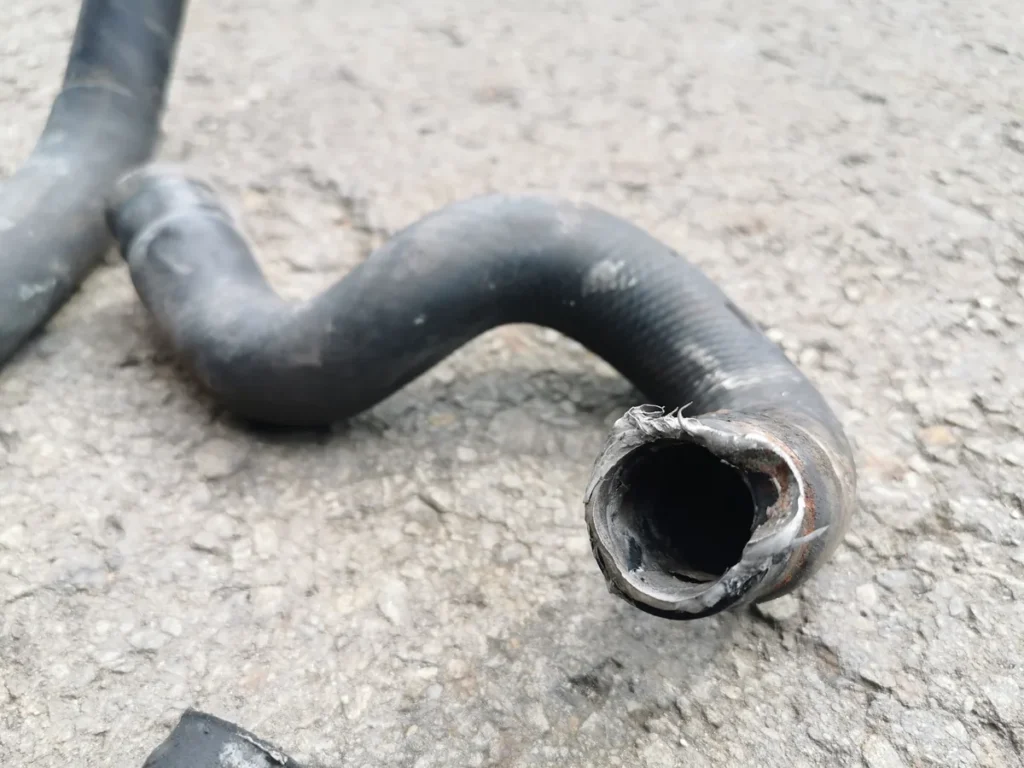
P0507 is a measurement, not an accusation. The ECU has compared the idle speed it asked for with the idle speed it is actually getting, found the real figure sitting above target by more than it will tolerate, and stored a code to say so. Nothing in that tells you which component is responsible. What it does tell you is something quite specific and quite useful: air is reaching the engine by a route the ECU cannot control.
What the code actually means
Idle speed on a modern petrol engine is not a fixed mechanical setting. The ECU picks a target, adjusts it for coolant temperature, electrical load, air conditioning and gear selection, and then meters exactly enough air past the closed throttle to hit that target. On older cars a dedicated idle air control valve handles the metering. On newer ones the electronic throttle plate is held very slightly open and does the job itself.
Because the ECU both sets the target and controls the air, it can check its own work. It watches actual engine speed against the target it commanded, and if the engine sits persistently above that target by more than a set margin for long enough, P0507 goes in the memory. Most manufacturers use a threshold of a couple of hundred RPM over target, though the exact number varies, so do not read too much into a small difference.
Here is the reasoning that makes this code genuinely informative. When the idle drifts up, the ECU responds by closing the idle air path down to bring it back. If the engine is still running fast with that path commanded fully shut, the air keeping the revs up is not coming through the route the ECU controls. It is getting in somewhere else. That is why unmetered air, meaning air entering after the mass airflow sensor and outside the throttle’s control, is behind so many of these faults.
There are two other families of cause. One is mechanical: the throttle plate itself is not fully closing, whether through carbon holding it off its seat, a sticking cable or pedal linkage on an older car, or a return spring that has lost its tension. The other is a component deliberately admitting air, such as an EVAP purge valve stuck open or a crankcase breather system that is passing far more than it should.
This is a petrol engine story throughout. Diesels do not meter idle with a throttle butterfly in the same way, so idle faults on a diesel show up under different codes and follow different logic.
Before you diagnose anything
A high idle is not always a fault. Every engine idles fast for the first minute or two from cold and then settles, and the ECU deliberately raises idle when the air conditioning compressor engages, when the alternator is working hard, or when the power steering is under load. The ECU knows about all of these and adjusts its target accordingly. P0507 is only stored when the engine is above the target the ECU has already adjusted.
Symptoms you’ll actually notice
- An idle that sits noticeably higher than it used to, often somewhere around 1,100 to 1,500 RPM when it should be nearer 700 to 800, though what is normal varies by engine.
- Revs that stay up when you lift off, taking several seconds to fall rather than dropping cleanly.
- The car creeping forward more strongly than expected in an automatic, or feeling like it wants to pull away at a junction.
- A hissing or whistling from the engine bay, if the unmetered air is coming through a split hose.
- Slightly firmer brake pedal feel, if a leaking servo or servo hose is the source.
- The engine management light, and possibly lean running codes alongside this one, which is a strong clue in its own right.
Likely causes, cheapest first
| Cause | Typical part cost | Why it’s on the list |
|---|---|---|
| Split, perished or disconnected vacuum hose | £3 to £25 | Rubber hardens with heat and age until it cracks at a bend or lets go at a stub. The most common single source of unmetered air, and often visible. |
| Carbon holding the throttle plate off its seat | £5 to £12 for cleaner | A ring of deposits around the bore stops the plate closing fully, so the engine gets more air than the ECU intends even at zero command. |
| Sticking throttle cable, pedal linkage or return spring | £0 to £30 | On older cable-operated cars a dry or badly routed cable holds the throttle slightly open. Free to check and sometimes free to fix. |
| PCV valve or crankcase breather hose fault | £10 to £60 | The breather system is a controlled air path into the inlet. When the valve sticks or a hose splits, it becomes an uncontrolled one. |
| EVAP purge valve stuck open | £20 to £70 | A purge valve jammed open feeds air and vapour into the manifold continuously, which the ECU never asked for. Often shows up alongside evaporative system codes. |
| Intake manifold or throttle body gasket leaking | £15 to £70 for the gasket | Gaskets harden and shrink over the years, and plastic manifolds can distort. More labour than cost, but the parts are cheap. |
| Brake servo or servo hose leaking | £40 to £200 | The servo takes a large vacuum feed straight from the manifold. A leaking diaphragm admits a lot of air, and it is a braking component, so it matters twice over. |
Notice how much of that list costs less than a takeaway. The mistake to avoid is jumping to the throttle body or the idle air control valve because they are the components with idle in their name. On a car storing P0507 the idle control hardware is frequently working perfectly and simply losing an argument with a hole somewhere else. Confirm where the air is coming from first, then decide what to buy.
Narrowing it down with live data
The single most valuable parameter is whatever your car calls the idle air control position: step count, percentage, or commanded throttle angle. Watch it at a warm idle with everything switched off. If the ECU has driven that value to its minimum and the engine is still running fast, you have confirmed the air is bypassing the control path, and you can stop suspecting the valve. If the value is sitting in the middle of its range with a high idle, the picture is different and a control or sensor fault becomes plausible again.
Fuel trims come next and they are more informative than people expect. Unmetered air makes the mixture lean, so the ECU adds fuel and the trims go positive. Long term fuel trim above roughly ten per cent is worth investigating, and above about twenty five per cent the ECU has nearly exhausted its adjustment. The useful trick is to compare idle with a steady 2,500 RPM. A leak of fixed size is a large proportion of the small airflow at idle and a small proportion of the much larger airflow at higher revs, so trims that are strongly positive at idle and close to normal off idle point firmly at a vacuum leak. Trims that are equally positive at both suggest a fuelling or measurement problem instead.
Cross check with mass airflow in grams per second and with calculated load. Air entering after the sensor is never counted, so a car with a significant leak often shows a MAF reading and a calculated load that look low for the engine speed it is actually running at. Coolant temperature is worth confirming too, because a sensor stuck reporting a cold engine will make the ECU hold a fast idle deliberately and quite correctly.
Freeze frame closes the loop. It stores the conditions at the moment the fault was recorded, and the coolant temperature and engine load entries tell you whether this happens only when cold, only when hot, or regardless. A fault recorded exclusively at full operating temperature often points at a gasket or hose that seals when cold and opens as things expand. Live data and freeze frame are included from the Enhanced edition upwards rather than in Standard, and the edition list sets out what each one covers.
Quick check
With the engine idling, listen carefully along the intake ducting, the breather hoses and the large hose running to the brake servo. A vacuum leak of any size usually whistles or hisses. Then flex each rubber hose gently by hand, working along its length, and watch the tachometer: if the idle changes as you move a particular hose, you have found your leak without spending anything. Keep hands, sleeves and the lead well clear of the belts and the cooling fan while you do it.
Garage bill versus doing it yourself
| Job | Typical UK garage | DIY parts only |
|---|---|---|
| Smoke test to locate unmetered air | £50 to £110 | Not practical without a smoke machine |
| Replace a vacuum or breather hose | £40 to £90 | £3 to £25 |
| Clean the throttle body and carry out the relearn | £50 to £110 | £6 to £12 |
| Replace a PCV valve | £50 to £140 | £10 to £60 |
| Replace an intake manifold gasket | £150 to £400 | £15 to £70 |
Diagnosis in the UK is generally charged as roughly an hour of labour, with rates running from about £50 at a small independent up beyond £120 at a franchised dealer depending on where you are. Costs also swing hard with the car: a manifold gasket on a four cylinder engine with everything accessible is a very different bill from the same gasket on a V6 with the inlet buried. Treat all of these as a rough shape and get a quote for your specific vehicle.
When this is a DIY job and when it isn’t
Worth doing yourself
Hunting for vacuum leaks by hand and ear is genuinely effective and costs nothing. So is replacing a perished hose, cleaning a throttle body carefully with a cloth and proper cleaner rather than scraping it, freeing a sticky throttle cable, and swapping a PCV valve where it is accessible. If you have a car with a cable throttle, checking that the pedal returns fully and the cable has a little free play is a five minute job that occasionally solves the whole thing.
Hand it over
Anything touching the brake servo. It is part of the braking system, it is often awkwardly placed against the bulkhead, and getting it wrong is a safety problem rather than an idle problem. Inlet manifold removal on a modern engine is a bigger job than it looks, with fuel lines, sensors and torque sequences involved. And if you have checked everything you can reach and still cannot find the air, paying for a smoke test is a sensible purchase rather than an admission of defeat, because that is the tool that finds the leaks hands and ears cannot.
Clearing the code the right way
Repair first, clear afterwards. On this code there is a particular reason to be careful about the order: clearing the memory on many cars also resets the learned idle adaptations, and the engine may idle oddly for a short while as it relearns. Do that after a genuine repair and it is helpful. Do it while the leak is still there and you have simply made the picture more confusing.
Understand what pending and stored mean while you are testing. A pending code is the ECU’s first observation of the failure, logged but not yet confirmed and usually without the lamp. A stored code with the light on means the fault has met the criteria enough times to be certain. After a repair, watching for a pending code is the quickest honest feedback available, because it appears well before the lamp would.
If the code comes back, that is a result rather than a setback. It tells you that the hose you replaced was not the only one, or that the leak is somewhere you have not looked. Clearing the code to make the light go out while the idle is still high helps nobody: the fault repeats, and you lose the freeze frame data that would have narrowed the search.
What this means at MOT time
A high idle can affect the emissions readings taken at the test, but the bigger obstacle is simpler. In the UK an illuminated engine management light is an MOT failure by itself, whatever is behind it, so this code will fail the car even on a day the engine happens to be behaving. The same principle applies at a US emissions check, which fails a car both for an illuminated lamp and for readiness monitors that have not completed. That is exactly why clearing codes shortly before a test is counterproductive: the reset wipes the monitors, the tester sees them incomplete, and the car fails for a second reason on top of the first. Find the leak, fix it, drive the car for a few days, and go to the test with everything set.
Check the software works with your car before committing
AutoScan is Windows software that runs with an ELM327 lead. The free download is there so you can confirm it installs and connects to your vehicle, and you can pick an edition afterwards.
Read it yourself
Stop guessing at the code
AutoScan reads the fault straight out of your car and tells you what it means in plain English, on your own Windows laptop. The trial reads real codes before you pay anything.
Keep reading
Related guides
P0455 Large EVAP Leak: Start With the Fuel Cap
A large evaporative leak is the one EVAP fault you can often find yourself in five minutes, and the fuel cap is…
P0016 Timing Correlation: Why a New Sensor Won’t Fix It
P0016 is a mechanical timing fault far more often than a sensor fault. Here is what the ECU compared, what usually causes…
P0442: Finding a Small EVAP Leak Without Guessing
What a small evaporative emission leak really is, why it hides so well, the cheap causes to rule out first, and how…