
P0401 EGR Flow Insufficient: Carbon, Cleaning and Costs
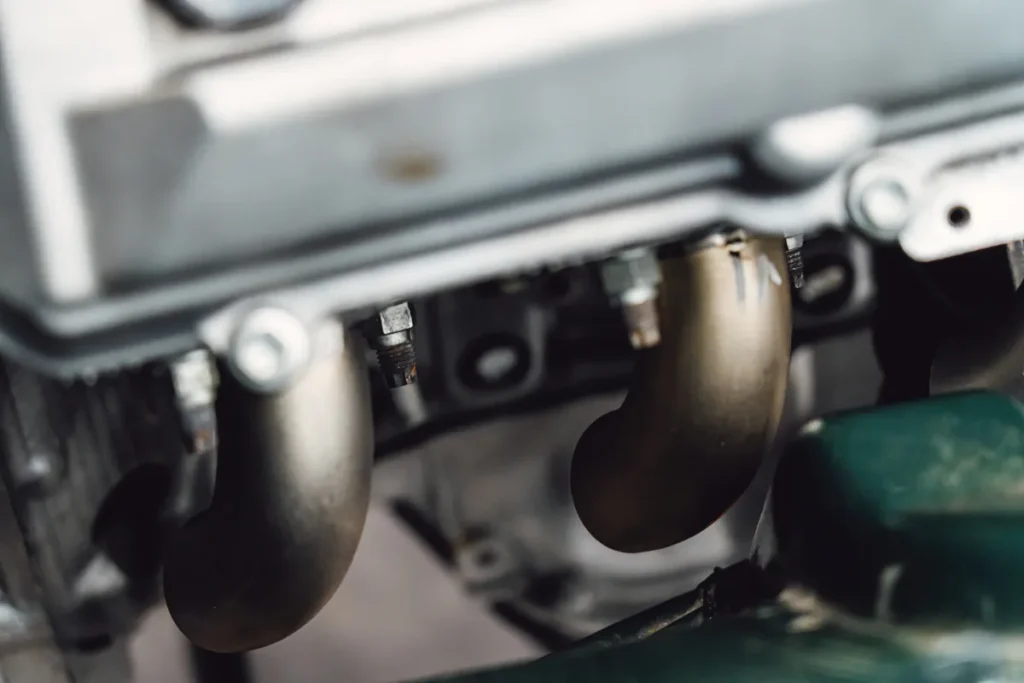
The ECU asked the exhaust gas recirculation system to let a measured amount of exhaust back into the intake, then checked whether anything actually happened, and decided too little did. On the overwhelming majority of cars the reason is soot. Carbon builds up in the valve and the passages behind it until the opening is too small to pass what the ECU wants, and the fix is often cleaning rather than a new part.
What the code actually means
Exhaust gas recirculation exists to control oxides of nitrogen, which form when combustion gets very hot. Feeding a metered quantity of inert, already-burnt exhaust back into the intake displaces some of the oxygen and takes the sting out of the flame, lowering peak combustion temperature and cutting the nitrogen oxide produced. It is not a bolt-on afterthought; it is part of how the car was certified and part of how it passes an emissions test today.
The ECU never simply trusts the valve. Depending on the design it works out flow from a differential pressure sensor reading across a calibrated restriction, or from a position sensor inside the valve, or by watching what happens to the air mass and manifold pressure when the valve is commanded open. Whichever method your car uses, the principle is the same: command flow, look for the expected change, compare against a threshold.
P0401 says the change was too small. The valve may not have opened, or it may have opened onto a passage that is largely blocked. Note the wording of the code carefully, because it describes a measured shortfall in flow, not a specific broken component.
This is a very common code on diesels, where the recirculated exhaust carries a lot of soot and the system runs much of the time. It also turns up on petrol cars that live on short, cold trips, where nothing ever gets hot enough or runs long enough to keep the passages clear. Add oil vapour from the crankcase breather and the deposits build faster still.
Before you look this up elsewhere
Blanking an EGR valve or removing it is an MOT failure and is not legal for a vehicle used on the road in the UK. It also does nothing about the deposits already sitting in your intake. Clean it or replace it.
Symptoms you’ll actually notice
Plenty of cars carry this code for months with the owner noticing only the lamp. Where symptoms do appear, they tend to be subtle rather than dramatic:
- The engine management light on, with the car otherwise behaving normally.
- A slightly rough or uneven idle, more common where the valve is stuck part open than fully blocked.
- Pinking or a light knocking sound under load on a petrol engine, because combustion is running hotter than intended.
- A small loss of low-end response on a diesel, sometimes with a little more visible smoke.
- A raised nitrogen oxide reading at an emissions test, on the tests that measure it.
If the same car is also throwing DPF or boost codes, deal with the whole picture rather than the EGR valve in isolation. Those systems share the same exhaust path and influence each other.
Likely causes, cheapest first
| Cause | Typical part cost | Why it’s on the list |
|---|---|---|
| Carbon build-up in the valve and its passages | £8 to £20 for cleaner and a gasket | By far the most frequent cause, especially on diesels and short-journey petrol cars. |
| Split, perished or disconnected vacuum hose | A few pounds of hose | On vacuum-operated valves a cracked pipe means the valve never gets the signal to open. |
| Blocked pressure sensing pipes to the differential pressure sensor | Nothing, or a few pounds | Soot fills the small metal pipes, so the sensor reports no flow even when there is some. |
| Faulty EGR solenoid or vacuum control valve | £20 to £70 | The valve is fine but is never being asked to open. Cheap to test and to swap. |
| Differential pressure sensor failed | £25 to £80 | The flow was there, the measurement was wrong. Worth ruling out before the valve. |
| Blocked or leaking EGR cooler | £80 to £300 or more | The cooler chokes with the same deposits, and a cracked one loses coolant as well. |
| EGR valve seized or electrically dead | £70 to £350 depending on the engine | Real, but confirm the control signal and the passages before buying one. |
Working cheapest first matters because a new valve bolted onto a passage full of soot sets the same code again. The deposits are the fault in most cases, and the valve is simply where they happen to be visible. Clean the whole path, not just the part you can unbolt.
Narrowing it down with live data
The parameters worth watching are commanded EGR position, actual EGR position where the car reports it, mass air flow in grams per second, intake manifold pressure, coolant temperature and engine load. The monitor generally runs at light, steady cruise on a warm engine, so the freeze frame usually shows those conditions, which tells you how to reproduce the fault.
The single most useful test is straightforward. Hold a steady light cruise or a steady raised idle and watch the air flow reading as the ECU commands the valve open. Recirculated exhaust displaces fresh air, so a working system produces a clear, momentary dip in the air mass figure. No dip at all, with everything else looking sensible, means nothing is getting through.
Now separate the two big candidates. If actual position tracks commanded position but the air flow never moves, the valve is opening into a blocked passage, so cleaning is your job. If actual position never follows the command, the problem is upstream of the valve body: the solenoid, the vacuum supply, the wiring, or a valve seized in its bore. On vacuum-operated designs you can often lift the diaphragm with a vacuum pump at idle and listen for the idle to stumble, which proves the passage is open even if the control is not.
Watch the differential pressure reading too, if your car publishes one. A sensor reporting the same value whether the engine is idling or working hard has either failed or has soot-filled pipes, and either way it makes a healthy system look dead. Following these values live needs live data and freeze frame, set out in the edition comparison.
Garage bill versus doing it yourself
| Job | Typical UK garage | DIY parts only |
|---|---|---|
| Diagnostic session | Roughly £50 to £120 | Your own time |
| EGR valve removed and cleaned | Roughly £90 to £250 | £8 to £20 in cleaner and gaskets |
| Solenoid or vacuum hose replaced | Roughly £50 to £140 | £5 to £70 |
| EGR valve replaced | Roughly £200 to £600 | £70 to £350 |
| Intake manifold removed and decoked | Roughly £300 to £800 | Long job, needs gaskets and patience |
UK garages usually charge around an hour of labour for diagnosis, and the rate varies widely by region and by whether you are at an independent or a dealer. Access is the real variable here: some valves are three bolts on top of the engine, others sit behind the manifold and turn a cheap clean into most of a day.
When this is a DIY job and when it isn’t
Cleaning, done properly
Cleaning is a genuine repair here, not a bodge. It is worth doing when the valve moves freely once the deposits are off, the sealing faces are sound and the shaft has no play or scoring. Take the valve off, fit a new gasket, and use a dedicated carbon or intake cleaner with a brush and plenty of time. Keep solvent away from any connector, motor or diaphragm, and never dunk an electronically actuated valve. Clean the port in the manifold too, because that is where the worst of it usually is.
When to fit a new valve or step back
Replace rather than clean when the shaft is seized, the pintle is pitted, the internal motor or position sensor has failed, or the valve was cleaned before and the code came back quickly. Some electronically controlled valves need an adaptation reset afterwards, so check what your car expects first. Hand the job over if the valve is buried behind the inlet manifold, if the cooler is involved and coolant has to be drained, or if a DPF fault is in the mix, since getting the order of those repairs wrong is where money gets wasted.
Clearing the code the right way
Do the work first. Clearing a P0401 changes nothing about the soot in the passages, and it discards the freeze frame that told you when the fault occurred.
Understand pending against stored, too. The EGR monitor needs its particular cruise conditions before it runs at all, so a pending code means the test failed once and the ECU is waiting to see it again. A cleared code can therefore take several days of the right sort of driving before it returns or proves the repair worked; town driving alone may never run the test.
Clearing wipes the readiness monitors as well, and the EGR monitor is one of the slower ones to complete. If the code comes back after a clean, that is information rather than failure: it usually means the passages behind the valve, or the cooler, are still restricted.
What this means for your MOT
A lit engine management light is an MOT failure in the UK whatever the code, so P0401 will stop the car passing even though it may drive perfectly well. The EGR system is also part of how the engine keeps nitrogen oxide production down, so a car with it out of action is not doing what it was certified to do, and a US smog check fails on both a lit lamp and incomplete monitors. Clean or repair the system and let the tests run.
Start by reading the code properly
Knowing whether P0401 is alone or sitting alongside DPF, boost or sensor codes changes the order you work in. AutoScan Standard reads and clears stored and pending codes from a database of 14,309 of them.
Read it yourself
Stop guessing at the code
AutoScan reads the fault straight out of your car and tells you what it means in plain English, on your own Windows laptop. The trial reads real codes before you pay anything.
Keep reading
Related guides
P0171 System Too Lean (Bank 1): Causes and Real Fix Costs
What a lean code on bank 1 really tells you, how to read fuel trim properly, the causes in order of likelihood…
P0442: Finding a Small EVAP Leak Without Guessing
What a small evaporative emission leak really is, why it hides so well, the cheap causes to rule out first, and how…
P0301 Cylinder 1 Misfire: Find the Cause Before Buying Parts
How to use the coil and injector swap test to prove which part is faulty on cylinder one, so you replace the…