
P0300 Random Misfire: What Causes It and How to Find It
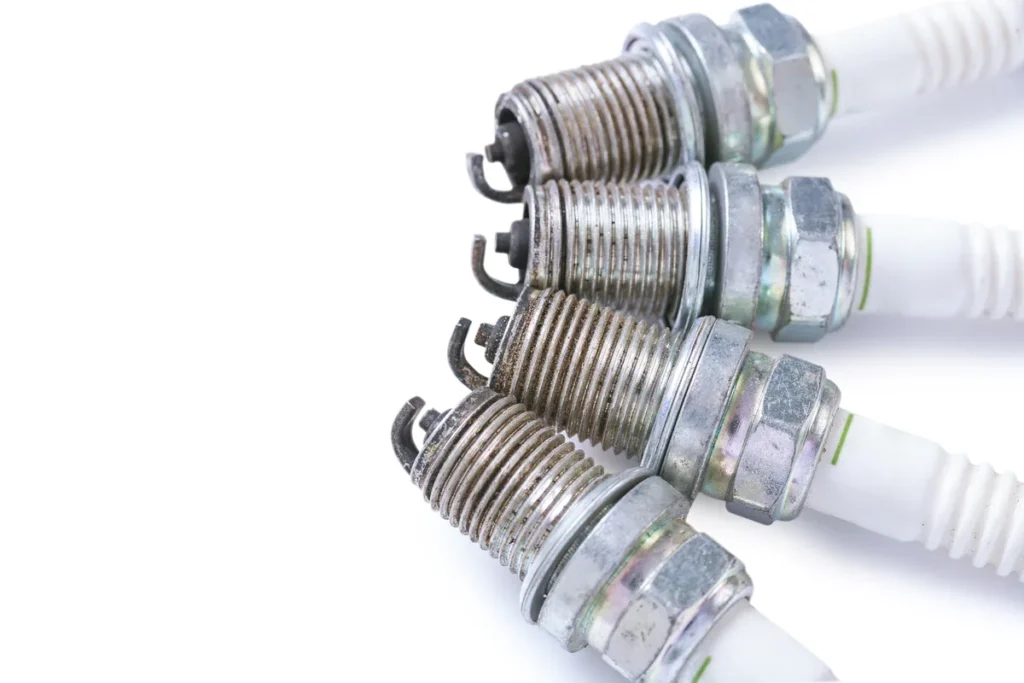
P0300 tells you the engine management system counted misfires across more than one cylinder, or misfires it could not pin on any single cylinder. It is a measurement, not a diagnosis. Because the problem is shared, the cause is usually something every cylinder depends on, such as fuel pressure, metered air, spark quality or valve timing, rather than one failed part on one pot.
What the code actually means
Nothing inside your engine watches combustion happen. What the ECU has is the crankshaft position sensor, accurate enough to see how hard the crank is pushed on every power stroke. A cylinder that burns its charge gives the crank a small kick; one that fails to burn gives it nothing, and the crank slows very slightly.
Knowing the firing order and the crank angle, the ECU works out which cylinder should have fired during each of those tiny slowdowns. It keeps a misfire counter per cylinder and compares the counts against a threshold over a fixed number of engine revolutions.
When one counter runs away alone you get a cylinder-specific code such as P0301. When two or more climb together, or the pattern is too scattered to pin on one cylinder, you get P0300. That is the whole reason a random misfire is chased differently. P0300 stored alongside a couple of specific codes, say P0302 and P0305, usually means a shared problem hitting the weakest cylinders hardest.
Every misfire also pushes unburnt petrol out of the exhaust port. The catalytic converter tries to burn it, runs far hotter than designed, and can be wrecked in a short drive. That is why the warning light behaves differently for misfires.
Stop if the light is flashing
A flashing engine management light means a misfire is happening now and is bad enough to be cooking the catalytic converter. Pull over where it is safe and get the car recovered rather than nursing it home. A steady light means the fault was logged but is not doing that damage, so you have time to book it in.
Symptoms you’ll actually notice
A random misfire rarely hides. Most owners feel it before they see the light.
- Lumpy, uneven idle you can feel through the seat at traffic lights
- A stumble or flat spot when you accelerate under load
- Noticeably less power, and worse fuel consumption
- A smell of unburnt petrol at the back of the car
- Longer cranking, or a rough first thirty seconds from cold
Some P0300s are intermittent. One bad tankful, or a damp morning finding a hairline crack in an ignition lead, sets the code once and then leaves you with a light and a car that feels fine. That is not a fault to ignore, but it does mean the freeze frame matters more than usual.
Likely causes, cheapest first
| Cause | Typical part cost | Why it’s on the list |
|---|---|---|
| Worn, wrongly gapped or oil-fouled spark plugs | Roughly £4 to £15 each | Plugs wear on every cylinder at the same rate, so when they go they take the whole engine with them. |
| Poor or contaminated fuel, or water in the tank | Cost of a fresh tankful | If it began within a day of filling up, known-good petrol tests it for nothing. |
| Vacuum leak: split breather hose, perished intake gasket, loose pipe | Roughly £5 to £45 | Unmetered air entering after the airflow sensor leans out every cylinder at once. |
| Ignition coil, coil pack or HT leads | Roughly £20 to £120 | On wasted-spark systems one unit feeds two cylinders, so a single failure looks multi-cylinder. |
| Dirty mass airflow sensor or clogged air filter | Roughly £10 cleaner, £30 to £90 sensor | Wrong air mass reported means wrong fuelling everywhere. |
| Low fuel pressure: blocked filter, tired pump | Roughly £15 to £45 filter, £80 to £300 pump | Starves every injector equally. Classic sign is a misfire only under load. |
| Mechanical: stretched timing chain, carbon-fouled valves, low compression | Several hundred pounds upwards | Least likely and most expensive. Suspect it on a high-mileage engine that also burns oil. |
That order is not decoration. People start at the expensive end, because injectors feel like a proper repair and plugs feel too simple to be the answer to a warning light. In practice plugs and ignition parts account for a very large share of real misfires and cost less than the diagnostic hour you would pay a garage to find them.
Narrowing it down with live data
The most useful screen is the per-cylinder misfire counter, where your car supports it. Counts spread evenly across all cylinders point at something shared: fuelling, air, timing or fuel quality. Counts clustered on one bank of a V engine narrow it to one cylinder head, one bank of injectors or one side of the intake, which is a far smaller search.
Fuel trims come next. Short-term trim moves second by second; long-term trim is the ECU’s learned correction. Long-term trim above roughly +10% means the ECU is adding fuel to compensate for something, and above about +25% it has essentially run out of adjustment. Trim that is high at idle and falls back as revs rise suggests a vacuum leak, because a fixed volume of extra air matters less as the engine draws more. Trim that stays high at every load points at fuel delivery or air metering instead.
Watch mass airflow in grams per second alongside calculated load, RPM and coolant temperature. What matters is the shape of the curve rather than any single figure: airflow should rise smoothly and immediately with throttle, with no plateau or dip.
Freeze frame is the part most people skip and it is genuinely the shortcut. When the code set, the ECU saved a snapshot of engine speed, load, coolant temperature, fuel trims and road speed. A P0300 captured at 800 rpm on a cold engine with no load is a different problem from one captured at 3,500 rpm under heavy load when warm, and it tells you what to recreate on the test drive instead of guessing. Live values and freeze frame need the Enhanced edition or above, as the Standard licence reads and clears codes but does not stream sensor data; the edition comparison sets out which does what.
Garage bill versus doing it yourself
| Job | Typical UK garage | DIY parts only |
|---|---|---|
| Diagnostic time to find the misfire | Roughly £50 to £120 | Your own adapter and software |
| Four spark plugs replaced | Roughly £70 to £160 | Roughly £20 to £60 |
| One ignition coil replaced | Roughly £90 to £250 | Roughly £25 to £120 |
| Vacuum hose or intake gasket | Roughly £60 to £200 | Roughly £8 to £45 |
| Compression or leak-down test | Roughly £60 to £150 | Roughly £30 to £70 for a gauge kit |
UK garages commonly bill diagnosis as about an hour of labour, and rates vary widely between small independents and franchised dealers, and between regions. Every figure above is a range for a reason: parts differ enormously between a three-cylinder city car and a V6, and a plug change that takes twenty minutes on one engine means removing the inlet manifold on another.
When this is a DIY job and when it isn’t
Reasonable to tackle at home
Plugs, coils, leads, air filter and visible vacuum hoses are within reach of anyone with a socket set and an afternoon. Spark plugs have a torque figure and it is not optional: overtightening into an aluminium head is an expensive mistake, and undertightening lets combustion gases past the seat. Buy the plug your car’s spec calls for, in the correct heat range, and check the gap out of the box.
Hand it over
Probing a live ignition circuit with the engine running, anything involving pressure at the fuel rail, and anything below the surface such as timing chain wear or compression across the block belong with a garage. Fuel systems stay pressurised after switch-off, and a mechanical timing fault diagnosed wrongly ends with bent valves. If plugs and coils have not cured it, stop buying parts and pay for an hour of somebody else’s expertise.
Clearing the code the right way
Fix first, clear second. Clearing a misfire code before you have found the cause achieves nothing except deleting the freeze frame that would have helped you. Once the repair is done, clear it and drive the car through the conditions the snapshot recorded. If the fault is gone, the code stays gone; if it returns, you have learned something useful for free.
Know the difference between pending and stored. A pending code means the ECU has seen the fault once and is waiting to see it again before lighting the lamp; a stored one has confirmed it. A cleared misfire reappearing as pending is an early warning that the repair only partly worked. Clearing also resets the readiness monitors, the self-tests the ECU runs on the emissions systems as you drive, and those complete only after a mix of cold starts, town driving and steady cruising. Never clear a code to make a light go away before a test, and never clear one to hide a fault from a buyer.
What it means for your MOT
In the UK an illuminated engine management light is a straight MOT failure on its own, however the car drives, and a misfire bad enough to raise emissions can fail you a second time at the tailpipe. Clearing the code on the morning of the test makes matters worse, because incomplete readiness monitors are themselves a fail. (The same trap applies at a US emissions or smog check.) Fix the misfire, let the car complete its own self-tests, then go.
See what your ECU has actually stored
AutoScan runs on Windows with an ELM327 lead and covers 14,309 fault codes, with live data from more than 90 engine sensors on Enhanced and above. The free download lets you confirm the software installs and talks to your car before you spend anything.
Read it yourself
Stop guessing at the code
AutoScan reads the fault straight out of your car and tells you what it means in plain English, on your own Windows laptop. The trial reads real codes before you pay anything.
Keep reading
Related guides
P0420: Why It Is Rarely Just the Catalytic Converter
What the ECU is really measuring when it stores P0420, the cheaper faults that produce an identical reading, and how to check…
P0128 Coolant Thermostat: Why the Engine Never Warms Up
P0128 means your engine is not reaching its expected temperature in the expected time. What that costs in fuel and wear, how…
P0171 System Too Lean (Bank 1): Causes and Real Fix Costs
What a lean code on bank 1 really tells you, how to read fuel trim properly, the causes in order of likelihood…