
What the MOT Actually Tests on the Emissions Side
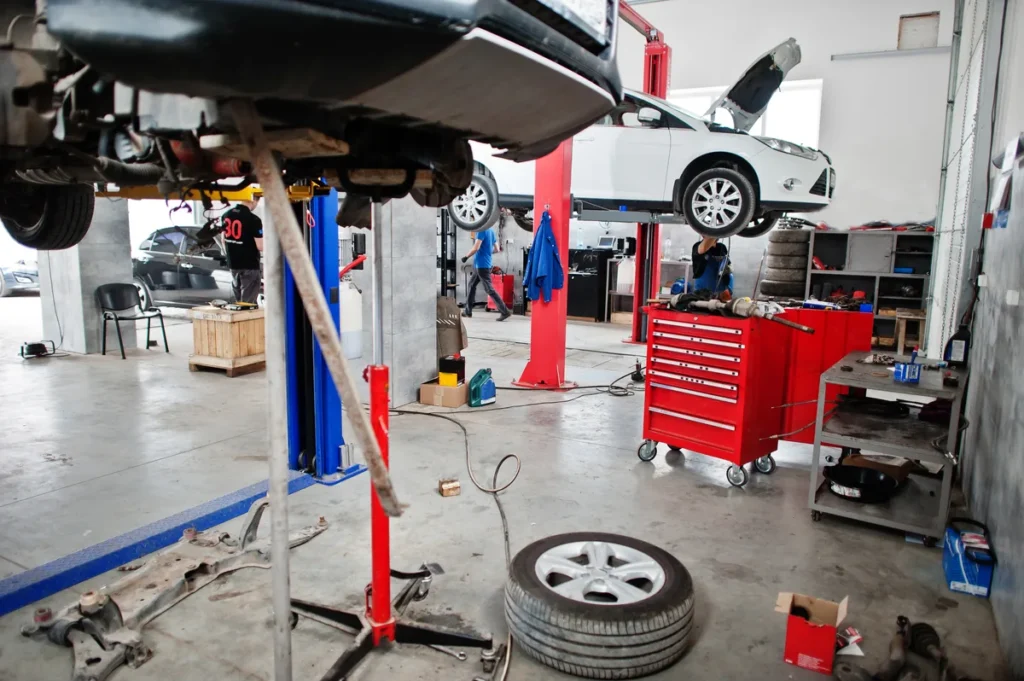
The emissions part of an MOT is narrower and more mechanical than most people imagine. It is a tailpipe measurement, a lamp check and a look underneath. Nobody plugs a laptop into your car. Knowing exactly what is measured, and against what limit, makes the difference between fixing the right thing and guessing.
The four things being assessed
The emissions inspection sits in the nuisance section of the DVSA inspection manual, and it comes down to four items:
- The gases or smoke coming out of the exhaust, measured with an approved analyser.
- Whether the engine malfunction indicator lamp works and whether it is indicating a fault.
- Whether the original emissions control equipment is present, unmodified and not obviously defective.
- Visible smoke, judged by eye.
Each of those has its own defect category. Most of them are Major, which means a fail.
Petrol: the gas test
A petrol car is measured at two engine speeds. At fast idle — somewhere between 2,500 and 3,000 rpm — the analyser records carbon monoxide, hydrocarbons and lambda. At natural idle, which the manual defines as between 450 and 1,500 rpm, it records carbon monoxide again.
| Reading | Basic test limit | What it indicates |
|---|---|---|
| CO at fast idle | Up to 0.2% | Unburnt fuel that only partly oxidised — generally a rich mixture |
| CO at natural idle | Up to 0.3% | The same, at low load where enrichment faults show up |
| HC at fast idle | Up to 200 ppm | Raw unburnt fuel — misfire, weak ignition, or a converter not finishing the job |
| Lambda at fast idle | 0.97 to 1.03 | How far the mixture sat from the ideal ratio, and in which direction |
A car that fails those basic limits is not necessarily finished. It then goes to a full catalyst test, using either the manufacturer’s own figures where they are available to the tester or default limits determined by the vehicle’s registration date. Older cars are held to looser limits than newer ones, which is why a well-maintained 1990s car can pass a test that a badly running modern one fails.
Lambda is the useful one
CO and HC tell you something is wrong. Lambda tells you which direction. Below 0.97 the engine was running rich, above 1.03 it was running lean, and those lead to completely different repairs.
Diesel: the smoke test
Diesels are not gas-tested at all. There is no CO or HC figure on a diesel certificate. Instead the tester uses an approved smoke meter and measures opacity — how much light the exhaust plume blocks — while the engine is accelerated hard to maximum revs from idle.
If the first acceleration is over the limit, the tester repeats it, up to six accelerations in total, and the mean of any three consecutive readings decides the result. That averaging matters: a car that is genuinely marginal often improves across the accelerations as soot is cleared out, which is one reason a good run beforehand helps.
| First used | Engine | Opacity limit |
|---|---|---|
| Before the late 2000s | Non-turbocharged | 2.5 m-1 |
| Before the late 2000s | Turbocharged | 3.0 m-1 |
| the late 2000s to 31 December 2013 | All | 1.5 m-1 |
| From 1 January 2014 | All | 0.7 m-1 |
The tightening across those bands is dramatic. A 2015 diesel is held to a limit roughly four times stricter than a 2007 turbo diesel, which is why owners moving from an older car to a newer one are sometimes caught out by a fail on a car that appears to run perfectly well.
The DPF rule
On a diesel fitted with a particulate filter there is an additional and much harsher rule: visible smoke of any colour during the metered test is a Major defect, independent of what the opacity meter says. A filter that is not working properly will show, even if the numbers scrape through.
Visible smoke, judged by eye
Separately from the meter, the tester assesses smoke by observation, and this applies at idle as well as under acceleration.
Dense blue or clearly visible black smoke for a continuous period of five seconds at idle is a Major defect. Excessive dense blue or clearly visible black smoke during acceleration, to the extent that it would obscure the view of other road users, is categorised as Dangerous — a level above Major, and one that means the car should not be driven away.
The colour is a diagnosis in itself. Blue smoke is burning oil, usually valve stem seals, piston rings or a turbocharger seal. Black smoke is unburnt fuel, which on a diesel points at injectors, air supply or fuelling. White smoke that persists once the engine is warm, as opposed to the harmless steam you see on a cold morning, often means coolant getting into the combustion chamber.
The malfunction indicator lamp
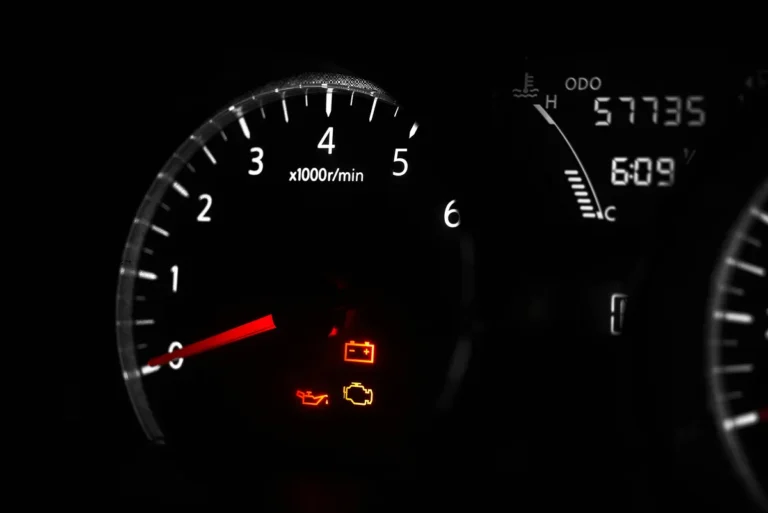
The tester turns on the ignition and checks that the engine management light comes on and then goes out, starting the engine first if the car needs it. The defect wording is “Engine MIL inoperative or indicating a malfunction”, and it is Major.
This item does not apply to every car. It is checked on petrol cars with four or more wheels and up to eight passenger seats first used on or after the early 2000s, and on diesel cars with four or more wheels first used on or after the late 2000s. Below those dates the lamp is not an inspected item, though whatever caused it to illuminate may still show up in the gas or smoke test.
A dead lamp fails too
“Inoperative” is in the defect wording. If the bulb never lights when you turn the ignition on, that is a fail in its own right — removing the bulb does not solve anything.
Emissions equipment: the look underneath
Under item 8.2.1.1 the tester must reject a vehicle where original emissions control components are missing, obviously modified or obviously defective. On a petrol car that covers the catalytic converter, the lambda sensors and the EGR valve. On a diesel it covers the oxidation catalyst, the particulate filter and the selective catalytic reduction system. The category is Major.
This is worth taking seriously if you are buying used. Modifications that were done years ago by a previous owner — a hollowed converter, a blanked EGR, a missing filter — are an automatic fail and are illegal for road use, and putting them right can cost considerably more than the car is worth.
What is not tested
Two absences surprise people.
First, readiness monitors. Some countries read the car’s own self-test status to make sure fault codes have not just been wiped before the test. The UK MOT does not. That does not make clearing codes before a test a good idea — the fault simply comes back, often quickly — but it is not what fails you.
Second, fault codes themselves. The tester does not read them. A car can have half a dozen stored codes and pass the emissions section, provided the lamp is not lit and the tailpipe numbers are within limits. That is a gap worth understanding rather than exploiting: those codes are still the cheapest description you will ever get of what is wrong with your car.
How to give yourself the best chance
None of these are tricks. They are the conditions the test assumes.
- Arrive with the engine properly hot. A converter that has not reached working temperature cannot clean the exhaust, and a cold diesel smokes. Fifteen to twenty minutes of real driving, not idling on the forecourt.
- Fresh oil helps. Old, fuel-diluted oil raises hydrocarbon readings through the crankcase ventilation system, and on a diesel it contributes to smoke.
- Fix any warning light before the test, not after. On a car in scope for the lamp check, an illuminated light is a fail regardless of what the analyser says.
- Deal with exhaust leaks. A leak before the sampling point lets fresh air into the sample and can skew every reading.
And if a light is on and you do not know why, find out before the test rather than after. The code that has been sitting in the engine control unit will usually name the system involved, and that is the difference between a targeted repair and a fail followed by an estimate.
Know what the car has stored before you book
AutoScan reads stored and pending fault codes from a Windows laptop through an ELM327 adapter and explains them in plain English. There are also 13 short video tutorials if you have not used diagnostic software before.
Read it yourself
Stop guessing at the code
AutoScan reads the fault straight out of your car and tells you what it means in plain English, on your own Windows laptop. The trial reads real codes before you pay anything.
Keep reading
Related guides
Will an Engine Management Light Fail an MOT?
Yes for most modern cars, but not for all of them, and the date your car was first used decides it. Here…
MOT Emissions Failure: Find the Cause Before the Retest
An emissions fail tells you the numbers were wrong but not why. Here is how to read the failure sheet, work out…
How to Check Readiness Monitors Before an MOT
The UK MOT does not read readiness monitors, but they are still the best proof that a repair actually worked. Here is…