
Will an Engine Management Light Fail an MOT?
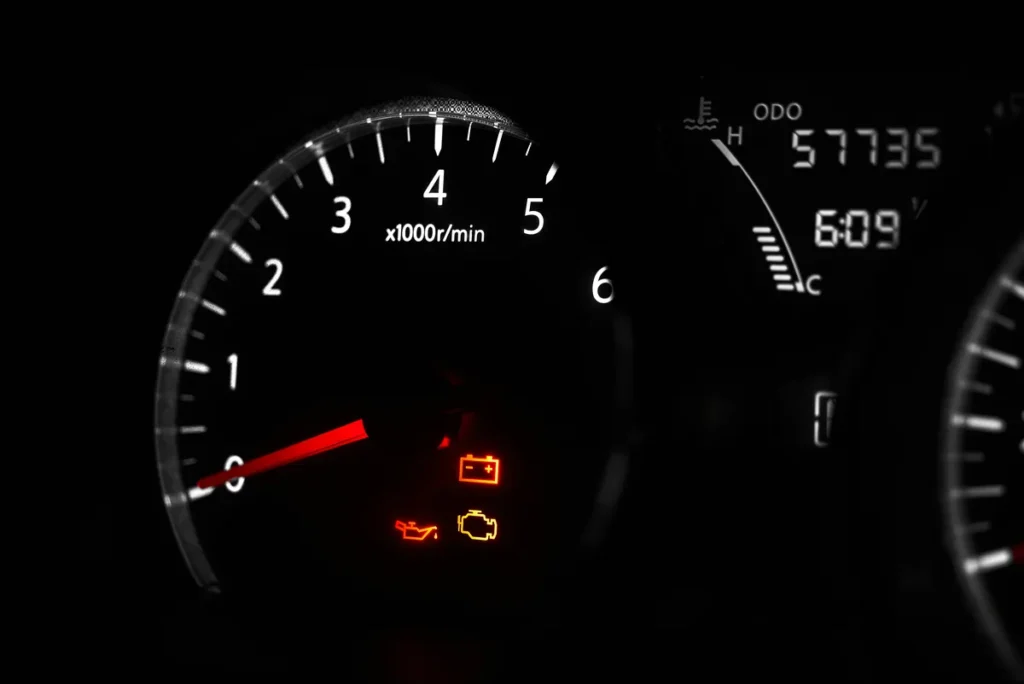
For most cars on the road today, yes. An illuminated engine management light is a Major defect in its own right, and a Major defect is a fail. But it is not true of every car, and the cut-off is not the one people usually assume. The MOT tester checks the lamp only on most petrol cars on most diesels.
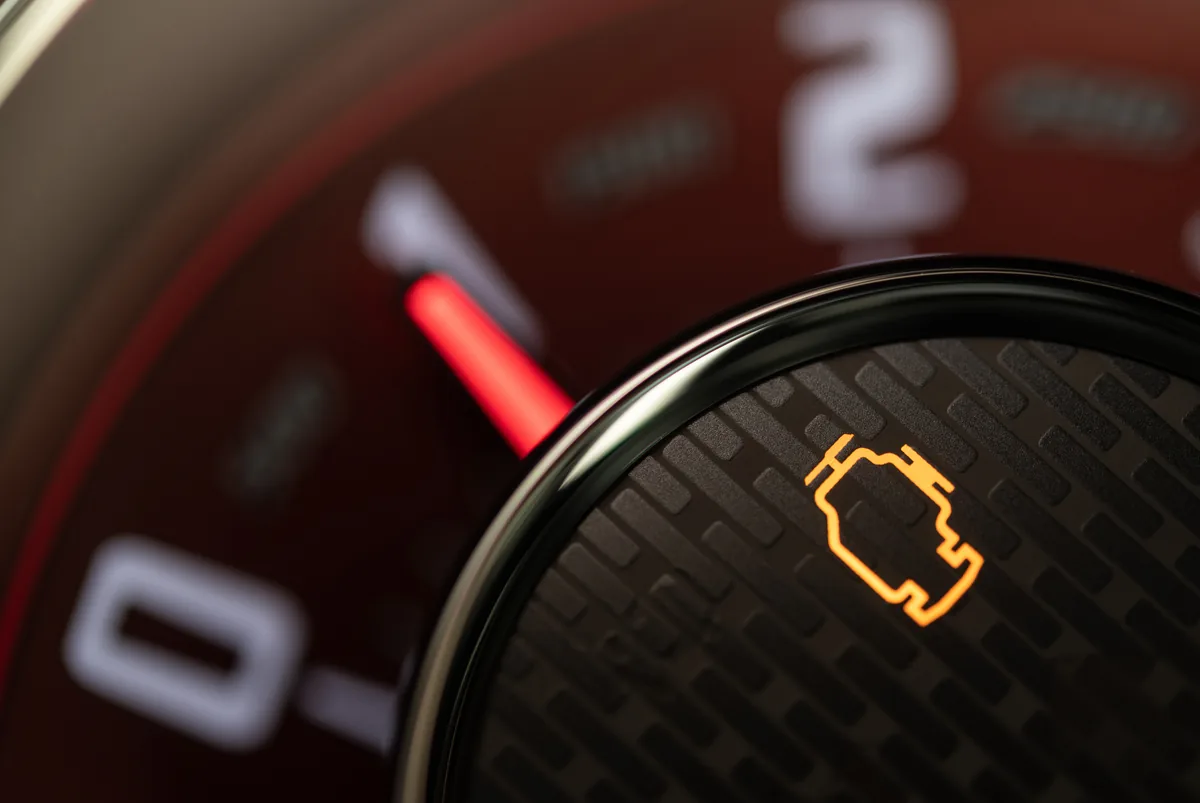
What the tester is actually told to do
The DVSA inspection manual gives the tester a very short instruction for this item. They turn on the ignition and check that the engine malfunction indicator lamp comes on and then goes out. On some cars the engine has to be started before the lamp extinguishes, and the manual allows for that.
The defect wording is “Engine MIL inoperative or indicating a malfunction”, and it is categorised as Major. In the MOT system a Major defect fails the test. There is no discretion and no advisory version of it.
Read that wording again, because it catches people out in both directions. A lamp that stays on is a fail, obviously. But a lamp that never comes on at all is also a fail, because it is inoperative. Removing the bulb, taping over the cluster or having a dead LED does not get you through — it fails you for a different reason.
The dates that matter
Petrol cars with four or more wheels and up to eight passenger seats: first used on or after the early 2000s. Diesel cars with four or more wheels: first used on or after the late 2000s. Older than that and the MIL is not an inspected item — though the emissions test still applies, and whatever turned the light on may well show up there.
Why an older diesel gets away with it and a 2004 petrol does not
This surprises a lot of owners. A 2006 diesel with a glowing engine light will not fail the MOT for the light alone. A 2004 petrol with the same light on will.
The reason is that the MOT requirement follows the point at which self-diagnostic systems became reliable and standardised enough across the fleet to be worth checking. Petrol engines got there first. Diesels were brought into the scheme later. It is a regulatory date, not a judgement about how serious the fault is.
None of which means an older diesel with a warning light is fine. It means the light itself is not the thing that fails you. The underlying fault may still push the car over the smoke opacity limit, or show up as visible smoke, and those are separate Major defects.
The light is a symptom, not the fault
An engine management light tells you that the engine control unit has stored a fault code and decided the problem is serious enough to warn you. It does not tell you what the fault is. It could be a fuel cap that was not tightened after the last fill-up. It could be a catalytic converter.
That gap between “something is wrong” and “this specific thing is wrong” is the whole problem. A garage will typically charge somewhere around an hour of labour to close it — often in the region of £50 to £100 in the UK, more in London and at franchised dealers, less at an independent. That is before any parts, and before the actual repair.
Reading the code yourself does not make you a mechanic. What it does is turn an unknown into a known. Once you have the code, you can look up what it refers to, work out whether it is a cheap sensor or an expensive component, and walk into the garage able to have a sensible conversation rather than handing over a blank cheque.
What happens if you clear the light and go anyway
This is the single most common piece of bad advice on the internet, and it is worth being blunt about.
Clearing a fault code does turn the lamp off. It also resets the car’s readiness monitors — the self-tests the engine control unit runs on its own emissions systems as you drive. Those monitors go from “complete” to “not ready”, and they stay that way until the car has completed a full drive cycle, which can take anything from a few miles to several days of mixed driving depending on the monitor and the car.
The UK MOT does not read those monitors, so on paper you might get away with it. What you will not get away with is the fault itself. If the problem is still there, the engine control unit will detect it again and relight the lamp, and there is nothing stopping that happening on the ramp, in the queue, or on the drive home. You have also thrown away the freeze frame data that would have told you what conditions the fault occurred under, which makes the eventual diagnosis harder and more expensive.
In the United States
An emissions or smog check will fail an illuminated MIL, and unlike the UK MOT it usually reads the readiness monitors directly. Clearing codes before a test there fails you immediately, because the monitors come back as incomplete.
What else on the emissions side can fail you
The MIL check sits alongside the rest of the emissions inspection, so it is worth knowing what is in the same section of the manual.
| Item | What is checked | Category |
|---|---|---|
| Engine MIL | Comes on with ignition, then goes out | Major |
| Emissions control equipment | Original components missing, obviously modified or obviously defective — catalytic converter, lambda sensors, EGR valve, DPF, SCR | Major |
| Petrol exhaust gases | CO, HC and lambda measured at fast idle, CO again at natural idle | Major if over limits |
| Diesel smoke | Opacity measured under acceleration, against a limit set by the vehicle’s age | Major if over limits |
| Visible smoke | Dense blue or clearly visible black smoke; on a DPF-equipped diesel, visible smoke of any colour during the metered test | Major or Dangerous |
That second row deserves a note. Anything that removes or defeats emissions equipment — a gutted catalytic converter, a blanked EGR valve, a missing DPF — is an explicit Major defect. It is also illegal for road use. If you have bought a used car and the previous owner did something clever, this is where it surfaces.
What to do if the light is on and the MOT is due
Work backwards from the amount of time you have.
If you have a few weeks
Read the code. Identify what it points at. Fix the actual fault, clear the code properly, then drive the car normally for a week or so before the test so the monitors complete and you can be confident the code has not come back. That last part is the bit people skip.
If the test is tomorrow
Read the code anyway, then decide honestly whether it is something you can put right in the time you have. A loose fuel cap or a disconnected sensor plug, yes. A cam timing correlation fault, no. If it is the second kind, moving the test is cheaper than paying for a fail and then a retest on top of the repair.
If the car has already failed
You normally have a limited window to get the repair done and bring the car back for a partial retest, which is usually free or reduced if you return to the same testing station within that window. Ask the station for their exact terms before you drive away, because the rules on what counts as a partial retest depend on what failed and whether the car left the premises.
Reading the code before you book
An ELM327 adapter plugs into the OBD2 socket, which on almost every car is within reach of the driver’s seat, usually under the dashboard on the right or behind a small panel near the steering column. Plug it in, connect it to a Windows laptop, and diagnostic software will pull the stored and pending codes out of the engine control unit and tell you in plain English what each one refers to.
It takes a couple of minutes, and it means the conversation with the garage starts from a fact instead of a guess.
Find out what the light is about first
AutoScan reads stored and pending fault codes on a Windows laptop and describes them in plain English, from a database of 14,309 codes. A one-off licence starts at £16.99, with no subscription and no per-vehicle limit.
Read it yourself
Stop guessing at the code
AutoScan reads the fault straight out of your car and tells you what it means in plain English, on your own Windows laptop. The trial reads real codes before you pay anything.
Keep reading
Related guides
OBD2 Live Data: What to Watch and What Is Noise
Modern cars report dozens of live parameters and most of them will not help you. The handful that actually diagnose faults, and…
P0401 EGR Flow Insufficient: Carbon, Cleaning and Costs
Why the EGR system exists, how the ECU works out that too little exhaust gas is getting through, and when cleaning the…
Does AutoScan Work With My Car? A Compatibility Guide
The dates that decide whether a car supports OBD2 diagnostics at all, what generic OBD2 can and cannot reach, and how to…